One Day We Will All Be Terr*rists: On Designations, Counterinsurgency & the Path of Resistance
Step 1: Donate to ELE ELNA ELAK here (sugg. donation $40)
Step 2: Register for “One Day We Will All Be Terr*rists” here
In this workshop, members of Al Ahrar Toronto will discuss the use of “terr*rist designations by Western regimes to criminalize the Palestine solidarity movement and isolate activists and organizations that challenge the global imperialist status quo. These designations, charges, and labels are part of a decades-long strategy used by imperialist states to criminalize resistance movements, beginning with Black and Indigenous struggles for self-determination.
Over the past three years, these “terr*rist” charges have been increasingly used as a tactic to suppress popular support for Palestine as well as opposition to the US-Zionist-NATO war of aggression in West Asia generally. This escalated “War on Terr*r threatens to silenceour movements and criminalize our voices and communities. No person or organisation is exempt from this repressive state tactic. You, too, could one day become a “terr*rist.”
Join Al Ahrar Toronto to explore how we can come together and strategize to collectively resist this attack on the movement for Palestinian liberation and self-determination and the broader anti-imperialist movement in north amerika.
NOTE: This workshop will not be recorded. Participants must attend at the scheduled date and time.
Al-Ahrar Toronto is an international organization working to support Palestinian prisoners through political education and building solidarity. Inspired by Toufan Al-Ahrar, the prisoner exchange secured by the Resistance that freed thousands of Palestinians in 2025, they amplify the struggle of Palestinian political prisoners, their conditions, and demands as they work to achieve justice and liberation for all of Palestine. They do this by organizing campaigns, hosting events, creating resources, building coalitions, and advocating for the rights of Palestinian prisoners and their families.
Karbala and the Ethos of Shia Resistance
Step 1: Donate to Sameer Project here (sugg. donation $40)
Step 2: Register for “Karbala and the Ethos of Shi’i Resistance” here
Join Jalees Hyder for a 3-part workshop on Karbala and the Ethos of Shi’i Resistance, where we will explore the origins and enduring ethos of Shi’i resistance, a framework rooted in the spirit of Karbala. Moving between history, ethics, and contemporary struggles, we will learn how a historical stance against injustice transformed into a living moral and political framework, as well as how memory is critical to sustaining collective resistance.
In Part 1 (June 21), we will cover the historical narrative of Karbala, and the way it structures a moral system based on submission vs. dignity.
In Part 2 (June 28), we will examine the ethical and philosophical foundations of Shi’i resistance, including martyrdom, sacrifice, mourning, steadfastness, and the transformation of remembrance into a political and spiritual act of defiance against oppression.
In Part 3 (July 5), we will discuss contemporary struggles rooted in the ethos of Shi’i resistance, and the endurance of Karbala in the present day. Participants will be provided with a short syllabus of anti-imperialist readings on Shi’i history.
Jalees Hyder is a Kashmiri writer and educator whose work examines empire, resistance, and moral authority across contemporary struggles. Grounded in Shi‘i political thought and shaped by lived experience under occupation, his writing explores questions of power, memory, and justice across historical and political contexts.
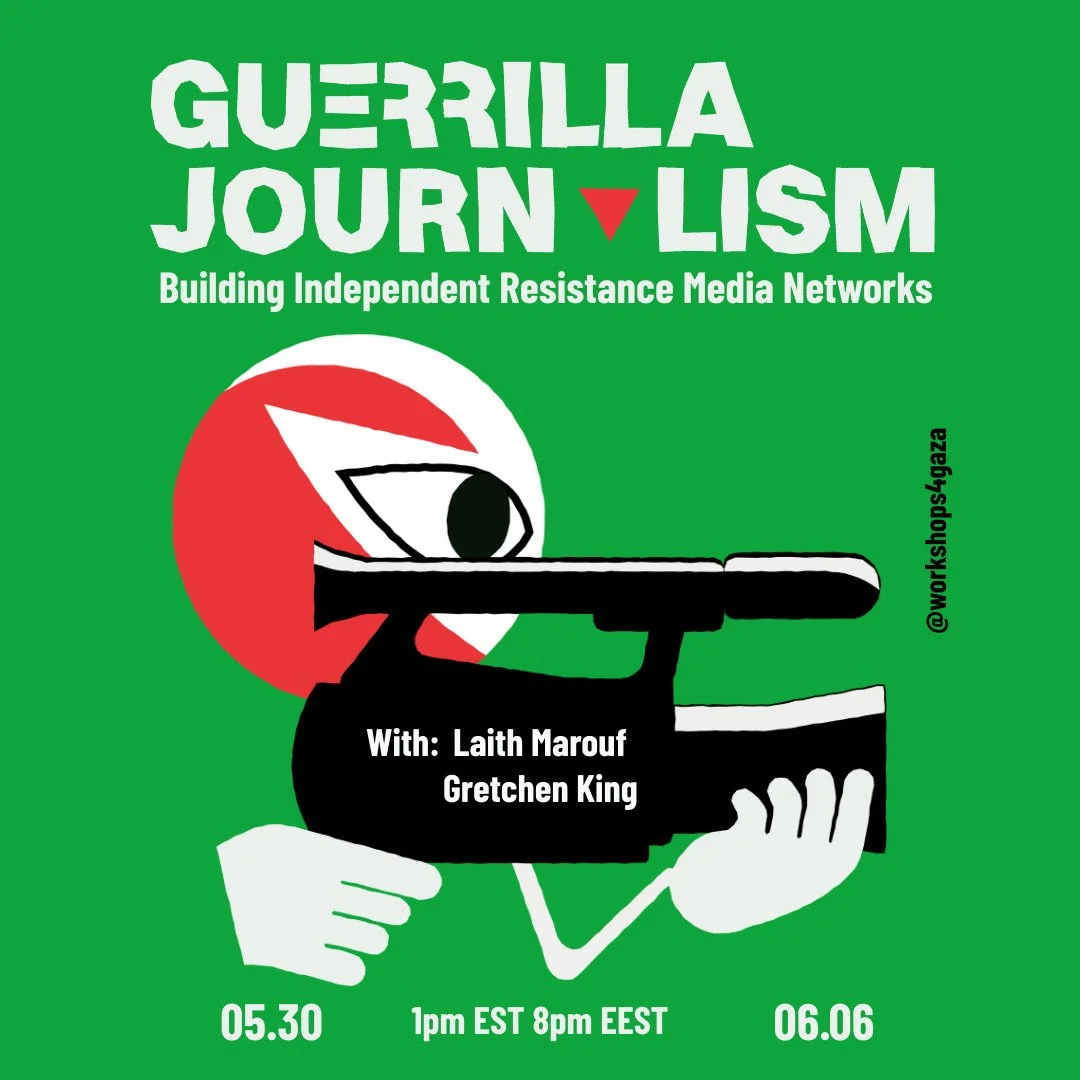
Guerrilla Journalism
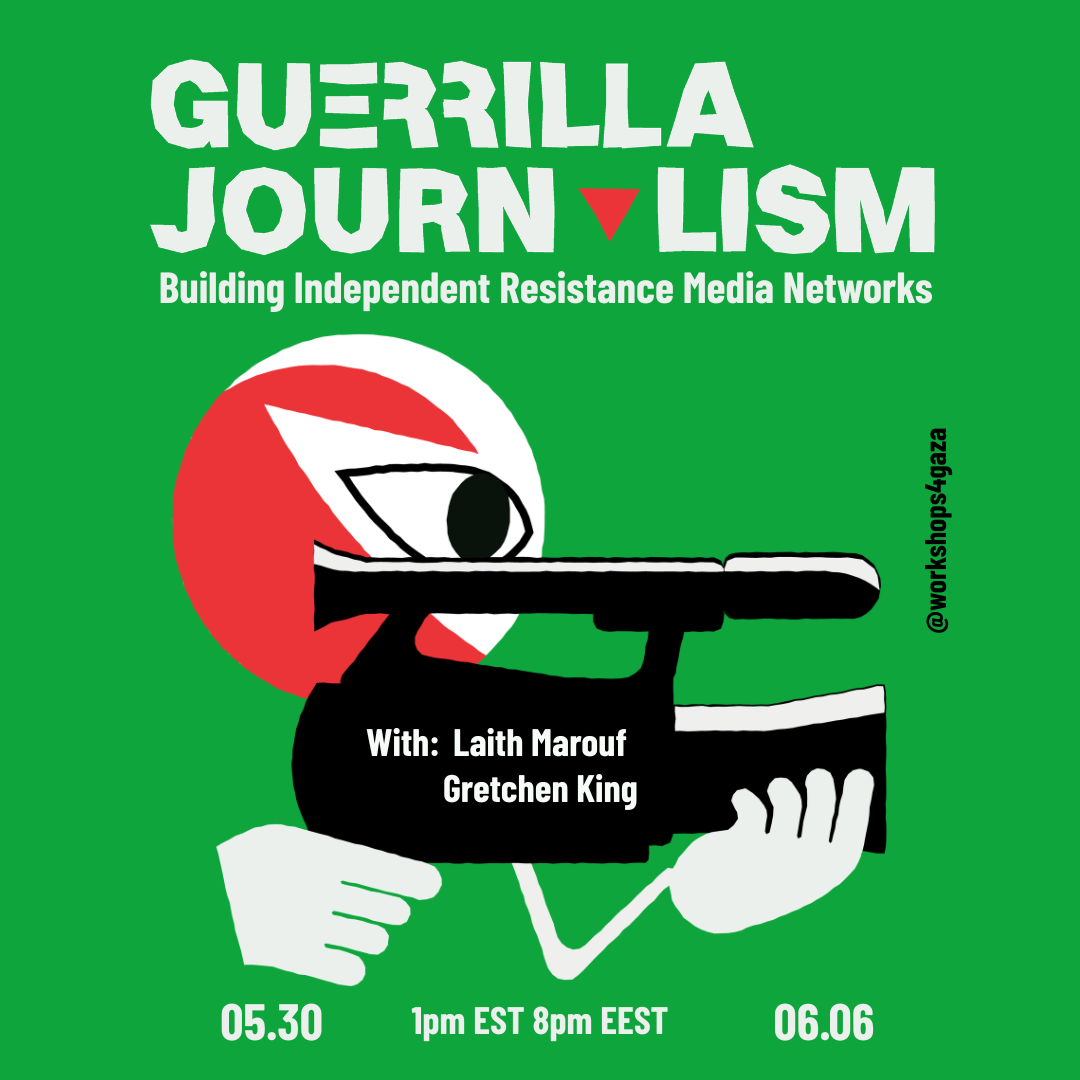
Step 1: Donate to Free Palestine TV here (sugg. donation $40)
Step 2: Register for “Guerrilla Journalism” here
Join Laith Marouf and Gretchen King for a 2-part workshop that explores the history, theory, and practice of guerrilla journalism.
In Part 1, Laith and Gretchen will discuss their prior experience in creating independent radio and media teams in fortress North America (specifically in so-called canada and the u.s.), reflecting on the failure of this earlier moment of “anti-globalization” to develop a sufficiently anti-imperialist political analysis. They will also examine the history of anti-imperialist media resistance in the Arab-Iranian region.
In Part 2, Laith and Gretchen will give an overview of Free Palestine TV, an independent, anti-imperialist, English language media team reporting from the front lines of Lebanon, the West Bank, Iraq, and Iran. They will cover FPTV’s development as a guerilla media team, and provide a technical overview of the logistics of shooting footage in the field, including how to build effective narratives through high-quality audio-visual content, land-based storytelling, and minimal post-production workflow that sustains the process of day to day filming.
Participants will come away with basic tools and building blocks for beginning their own practice of guerrilla journalism, empowering them to be active producers, rather than simply passive consumers, of anti-imperialist media.
NOTE: Proceeds from this workshop will be split between Nafas Community Kitchen, which serves hundreds of meals every day to displaced families in Beirut, and Free Palestine TV, an independent media outlet that relies on grassroots community support to fund 100% of its operating costs. Donations for this workshop will be collected through FPTV, who will transfer 50% of the proceeds to Nafas Community Kitchen at the conclusion of the workshop series. A receipt of this transaction will be shared publicly to ensure transparency!
Laith Marouf is a long-time political activist, award-winning journalist, and political commentator who has been working in media since 1999. In addition to founding Free Palestine TV, he regularly appears on television and radio, including on Press TV, RT, and Al Mayadeen, and has published with independent media outlets such as Electronic Intifada, Mint Press, Black Agenda Report and more.
Gretchen King is an Associate Professor of Multimedia Journalism and Communication at Lebanese American University and co-founder of Free Palestine TV. Gretchen helped launch indymedia in 1999 in Seattle and was part of building a broadcast network among pirate radio stations in the US called MicroRadio.net.
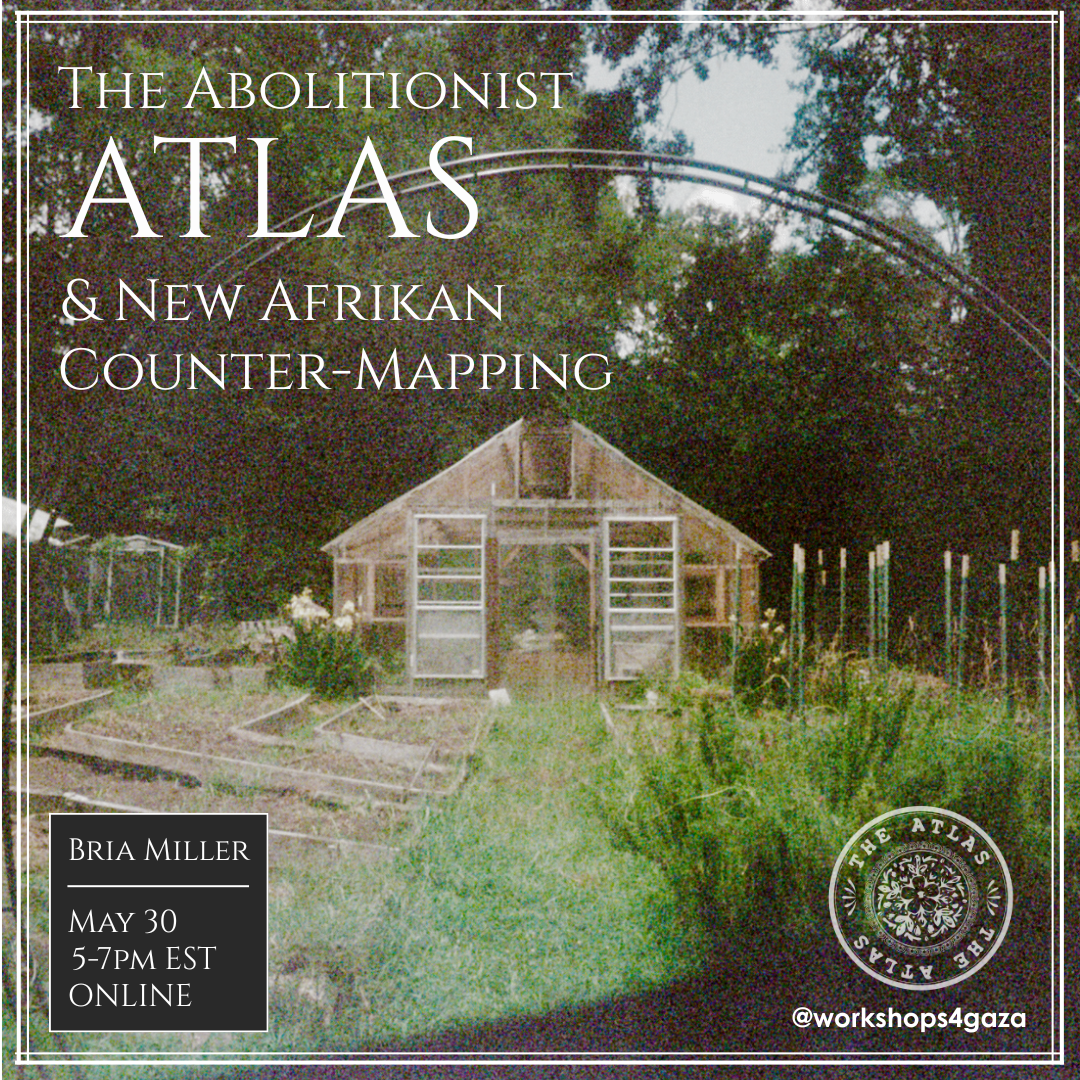
The Abolitionist Atlas & New Afrikan Counter-Mapping
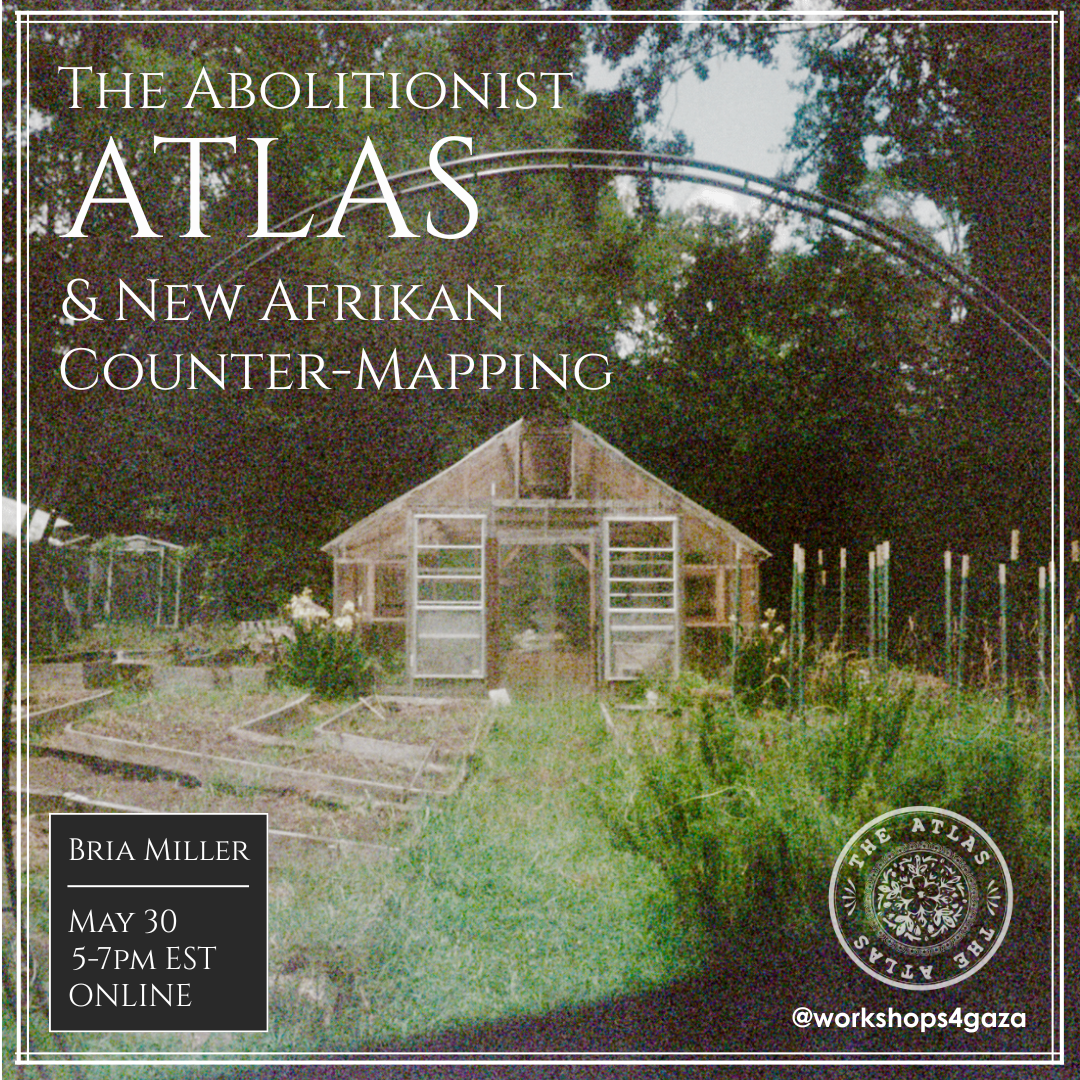
Step 1: Donate to Joy Powell here or here (sugg. donation $40)
Step 2: Register for “New Afrikan Counter-Mapping” here
This workshop will explore the methodologies and conceptual frameworks used to shape The Abolitionist Atlas, a tool and periodical that counter-maps abolitionist New Afrikan movement work across the Black Belt.
We will discuss how black people have historically developed counter-mapping practices against the backdrop of u.s imperialist violence and use New Afrikan counter-geographies as a spatial framework for mapping, visualizing and articulating decolonial territorial imaginaries.
Participants will also learn approaches to self-printing and publishing their own booklets, based on methods shared in the workshop. Free mailed copies of the Atlas will be available upon request.
All proceeds from this workshop will go to the Free Joy Powell Campaign, a community-driven effort to liberate incarcerated Black freedom fighter Joy Powell from prison.
Bria Miller is an interdisciplinary designer, researcher, and organizer whose practice spans urbanism, critical geography, and visual culture. In 2025, after completing her graduate studies in Architecture and Urban Design, she began to carry out her project, The Abolitionist Atlas, traveling across the Deep South to connect with New Afrikan organizers, practitioners and researchers engaged in self-determining work. Drawing on black fugitive and counter-mapping traditions, she developed a method of translating their knowledge, practices, and the political-economies shaping their work into the first edition of the Atlas.
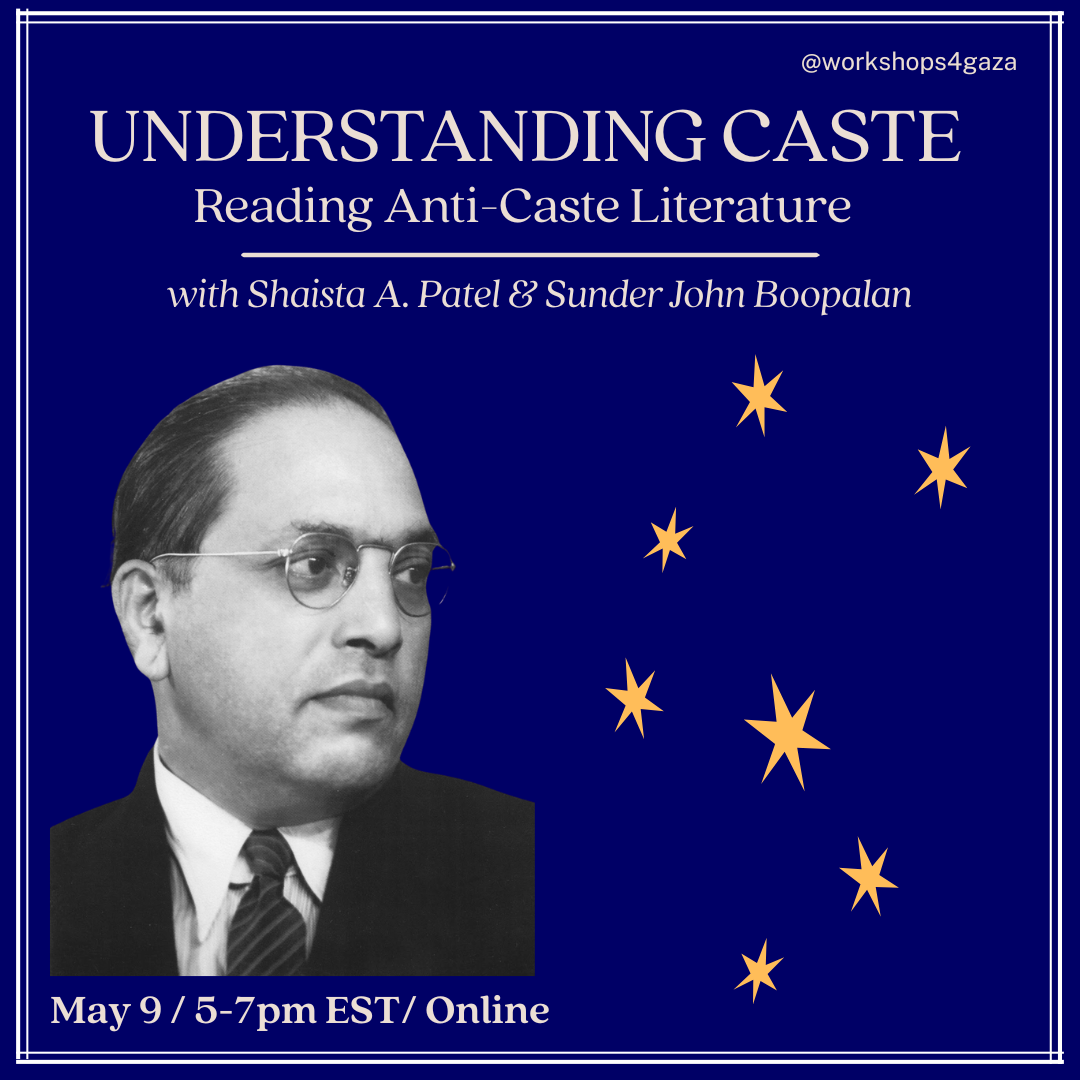
Understanding Caste: Reading Anti-Caste Literature
Step 1: Donate to Sameer Project here (sugg. donation $40)
Step 2: Register for “Reading Anti-Caste Literature” here
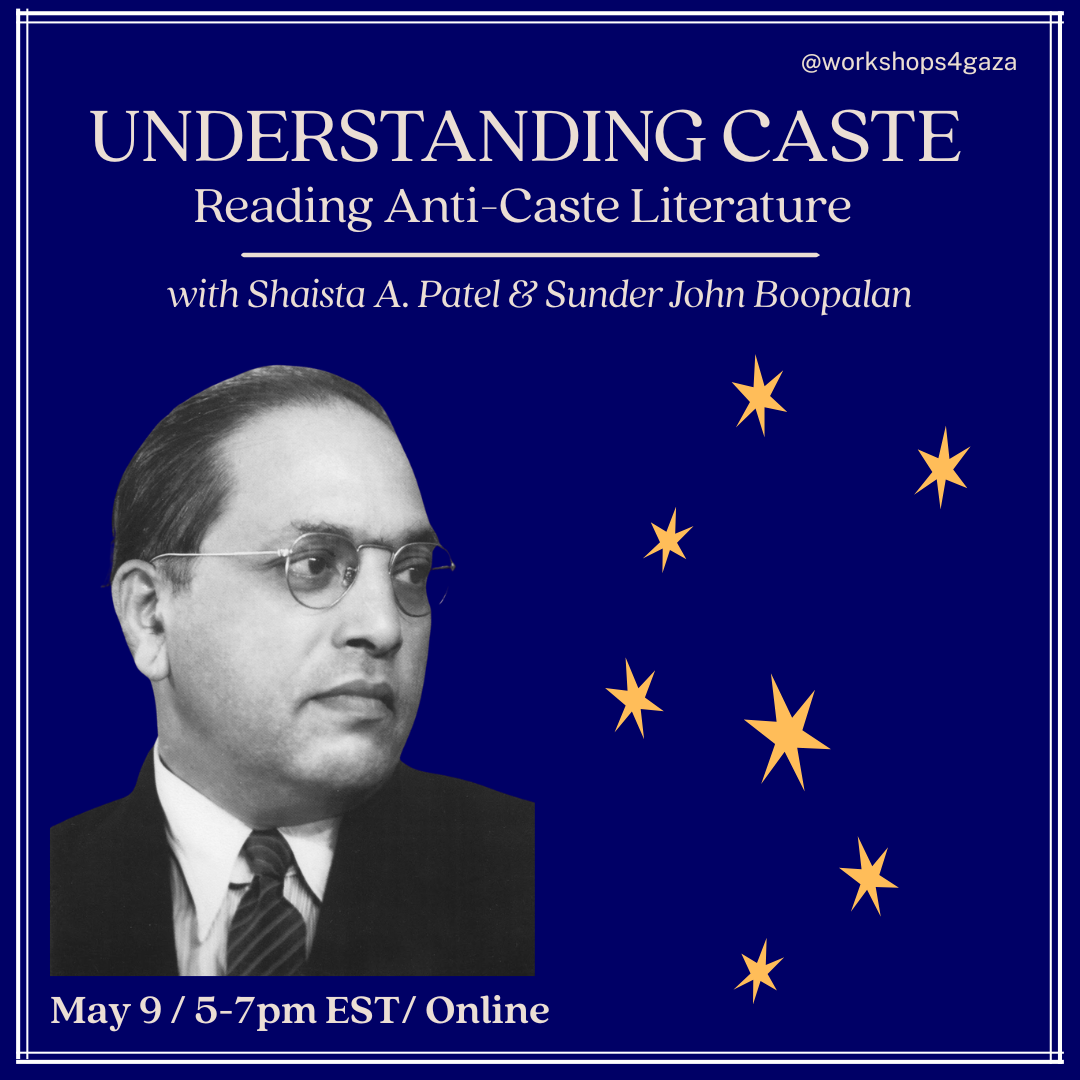
This workshop will offer a guided discussion on the work of Dr. B.R. Ambedkar (1891-1956) and his historic but undelivered 1936 speech, “Annihilation of Caste.” Ambedkar was an economist, lawyer, politician and Dalit revolutionary leader who played a central role in drafting the Indian constitution, as well as championing the rights of Dalit people in the subcontinent. He focused on how colonialism took shape within an extremely casteist undivided India.
Ambedkar worked tirelessly to defend the rights of Dalit and other caste-oppressed communities on the subcontinent, laying the foundation for the liberation of Dalit people from the brutality of the caste system. For Ambedkar, caste cannot be reduced to frameworks that rely solely on categories such as race or class; rather, caste must be understood as a social and heritable division of people within one racial group.
Our close reading and discussion of “Annihilation of Caste,” a foundational text in Dalit Studies, will help us understand what caste is, how we should understand its place in revolutionary movements today, as well as the way it has shifted form over time. Central to our discussion will be how to navigate the historic and ongoing contradictions between anti-colonial and anti-imperialist movements, and anti-caste movements which are often overlooked or flattened within these frameworks.
Shaista A. Patel is a scholar of critical Muslim and Dalit Studies who works in the Department of Ethnic Studies at University of California, San Diego. Their most recent article is “Rooted in the Soil: Defining Dalitness as an Ethic and Worldview” (Cultural Studies, 2025).
Sunder John Boopalan is Associate Professor of Biblical and Theological Studies at Canadian Mennonite University (CMU) in Winnipeg, Canada. His book, Memory, Grief, and Agency: A Political Theological Account of Wrongs and Rites compares Indian and North American contexts of casteism and racism to argue that wrongs today are better understood as rituals of humiliation - socially conditioned practices of domination affected by discriminatory logics of the past enacted against people who move out of place.
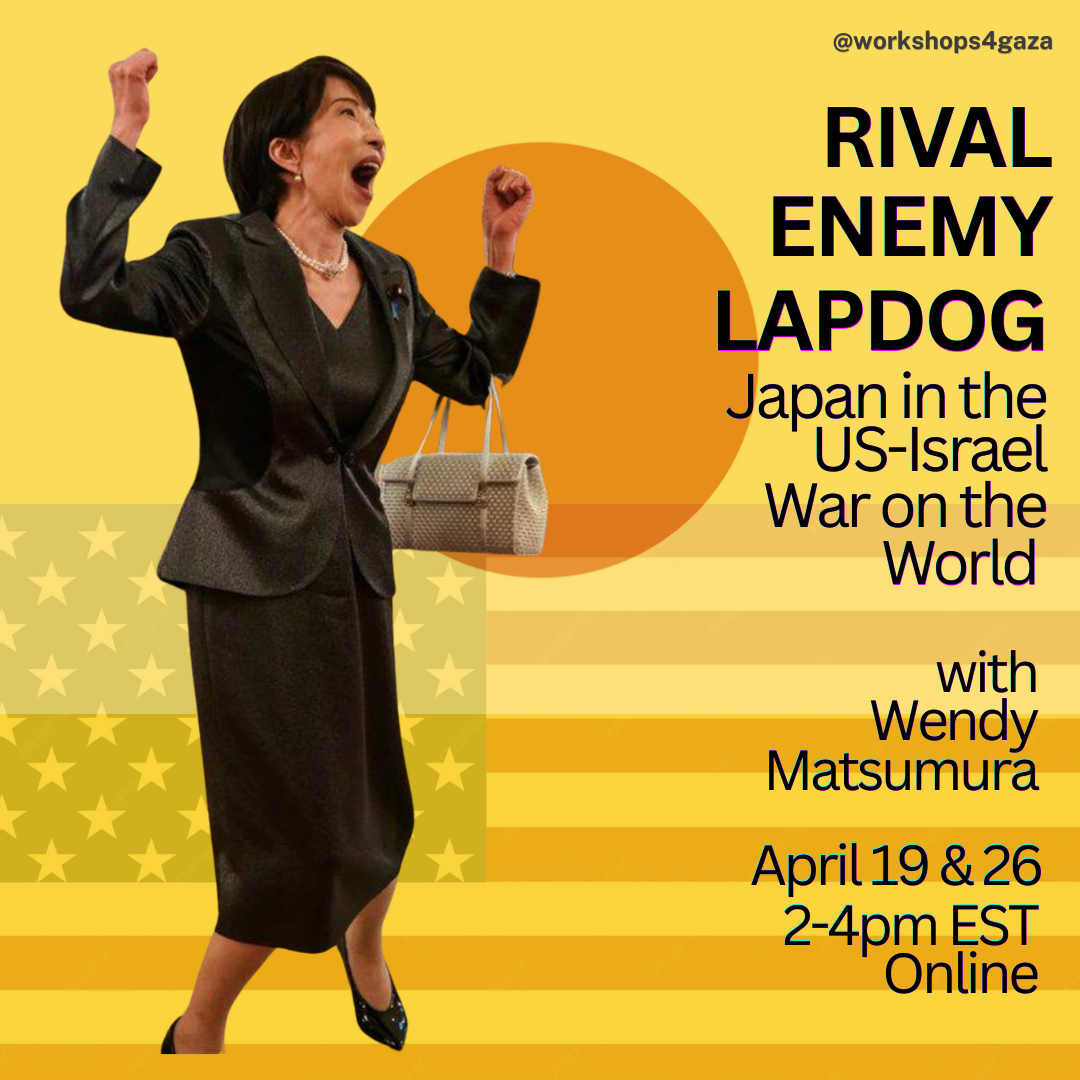
Rival Enemy Laptog: Japan in the US-Israel War on Iran

Step 1: Donate to Sameer Project here (sugg. donation $40)
Step 2: Register for “Rival Enemy Lapdog” here
Over the past month, the U.S. and Israel have escalated their war on West Asia by attacking Iran without provocation. In hindsight, the U.S.-Israeli genocide of Gaza that erupted in 2023 in response to the world-shattering Al Aqsa Flood was never an isolated act, but merely the front line of a regional and now global war on all those who refuse to surrender their sovereignty to US-led imperialist control.
While East Asia has remained relatively quiet thus far, Japanese Prime Minister Takaichi’s recent visit to the White House sparked unprecedented outrage from the Japanese people. As the U.S.’s war on Iran and the resulting restrictions on the Strait of Hormuz threaten to embroil the whole world in war, how should we make sense of the US’s longtime and arguably most loyal ally and proxy in the region?
This workshop will contextualize the often contradictory messages that those on the western left receive about Japan, showing how its postwar consolidation as a u.s. proxy state retained significant elements of its prewar fascism and ethnonationalism. We will discuss how and why Japan has variously been positioned as an enemy, rival and ally of the u.s. in order to make sense of what is likely to come as the u.s. inches closer to confrontation with its super-rival, the Peoples Republic of China.
Wendy Matsumura is the author of two books on Japanese colonialism, capitalist development, and anti-imperialist resistance in Okinawa. Her latest is Waiting for the Cool Moon: Anti-Imperialist Struggles in the Heart of Japan’s Empire (Duke UP, 2024). When purchased through Open Books at the link above, all proceeds will be donated to the Sameer Project.
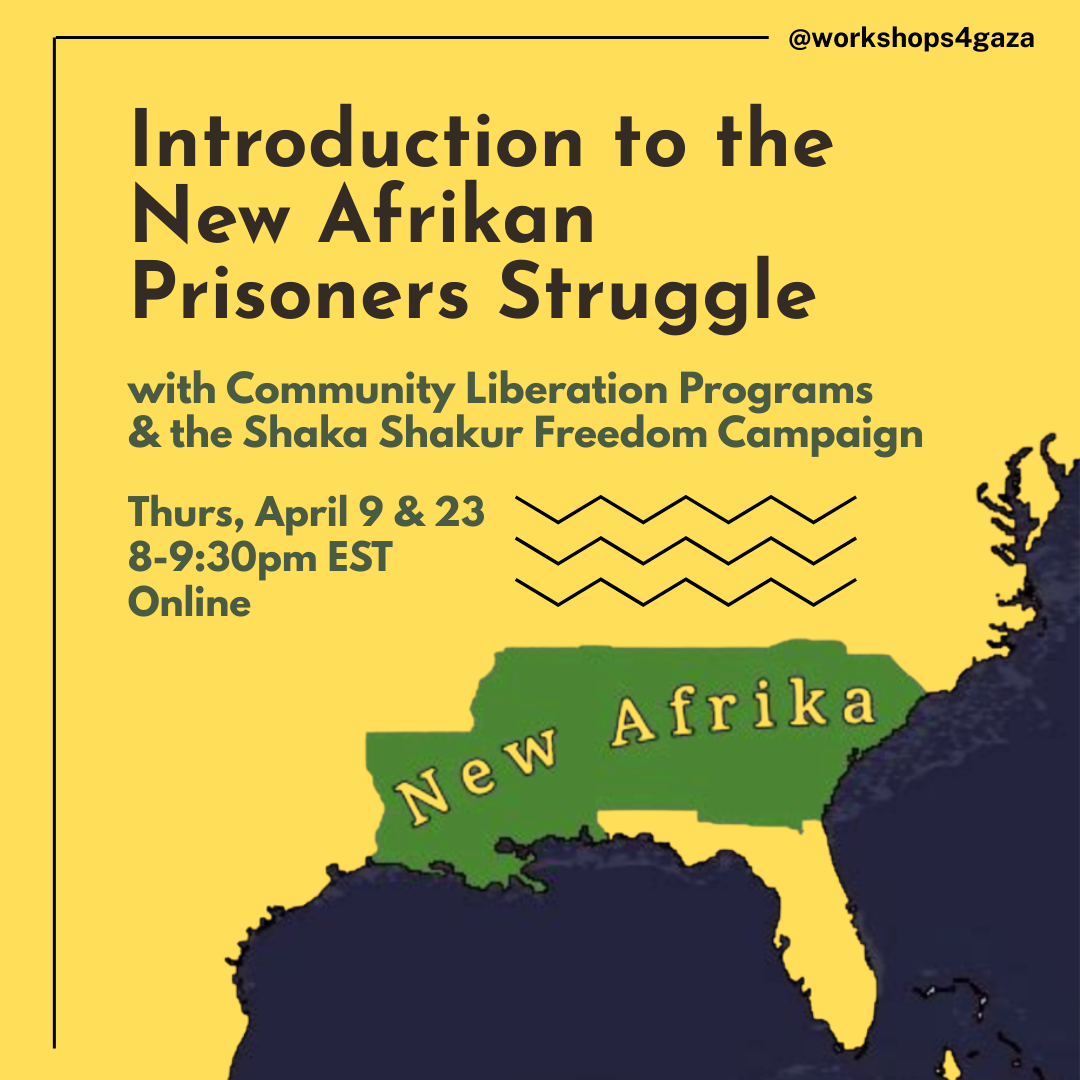
Intro to the New Afrikan Prisoners Movement

Step 1: Donate to Shaka Shakur here (sugg. donation $40)
Step 2: Register for “Intro to the New Afrikan Prisoners Movement” here
This 2-part workshop will explore the origins and foundations of the New Afrikan Prisoners Movement, highlighting the ways that New Afrikan political prisoners in particular became the theoretical architects and visionaries of The New Afrikan Independence Movement (NAIM), a national liberation struggle that had experienced severe repression by the end of the 1970's. Officially established in 1968, NAIM developed a Black nationalist political framework and praxis rooted in the establishment of The Republic of New Afrika (RNA), a Black nation-state in the U.S. South in the lands of Louisiana, Mississippi, Alabama, Georgia, and South Carolina.
Part 1 of the workshop (April 9) will explore some of the founding ideas and figures of NAIM, including the Black Guerilla Family, the RNA-11, Queen Mother Audley Moore, and Robert F Williams. We will also discuss key concepts developed by incarcerated theoreticians of NAIM, including James Yaki Sayles, Sanyika Shakur, and Shaka Shakur, as well as the organizations and publications that helped circulate their ideas behind bars, including the New Afrikan POW Journal and Vita Wa Watu.
In Part 2 (April 23) we will read and discuss select texts from each of these theoreticians, including excerpts from James Yaki Sayles’ Meditations on Frantz Fanon’s Wretched of the Earth, Sanyika Shakur’s Stand Up Struggle Forward, and Shaka Shakur’s Meditations of Thought: When the Dragon Comes.
Community Liberation Programs is a Bay Area-based organization that organizes around “decolonization programs,” a concept developed by former New Afrikan political prisoner Jalil Muntaquim, which includes youth street medic programs, political education initiatives, grocery distribution, and more.
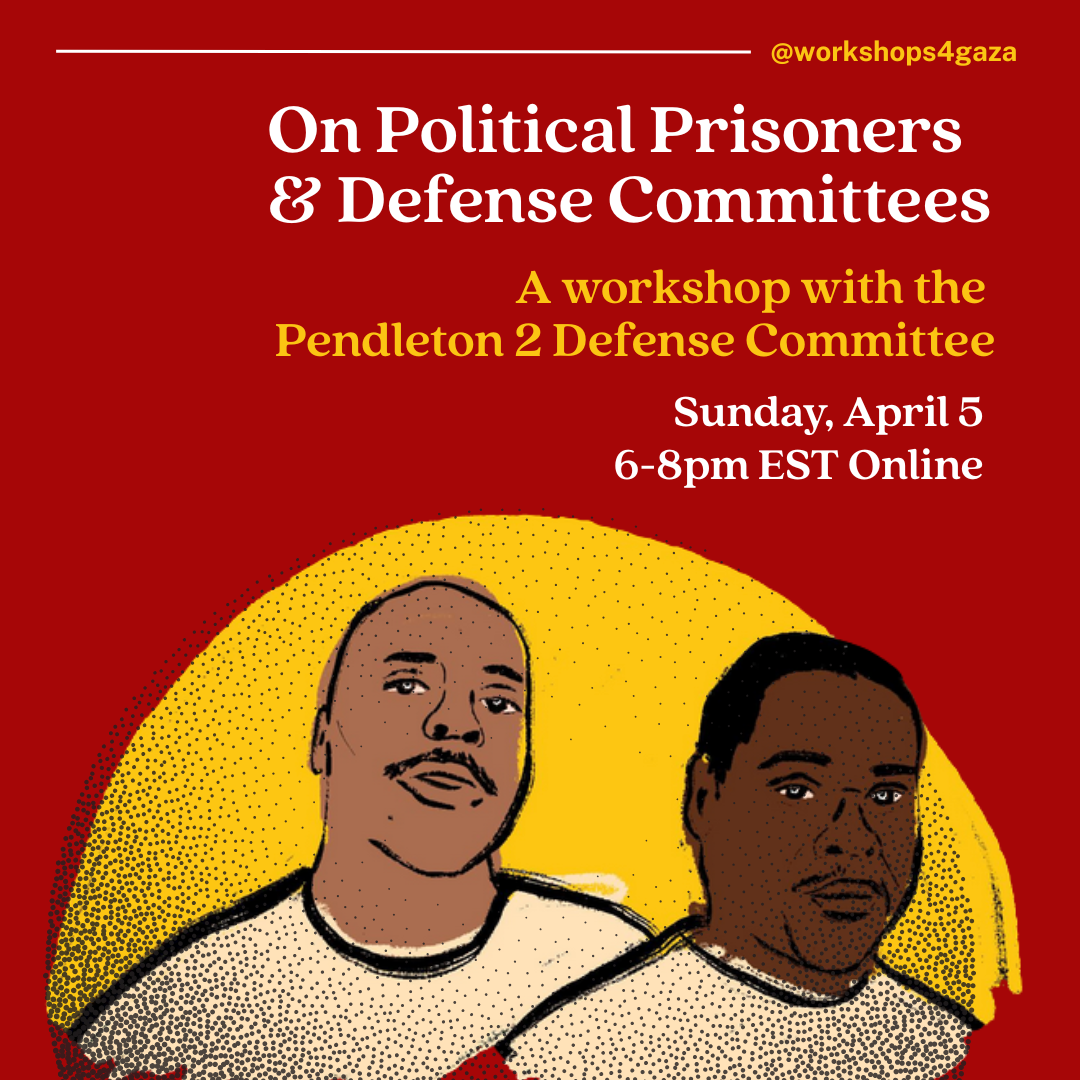
On Political Prisoners & Defense Committees
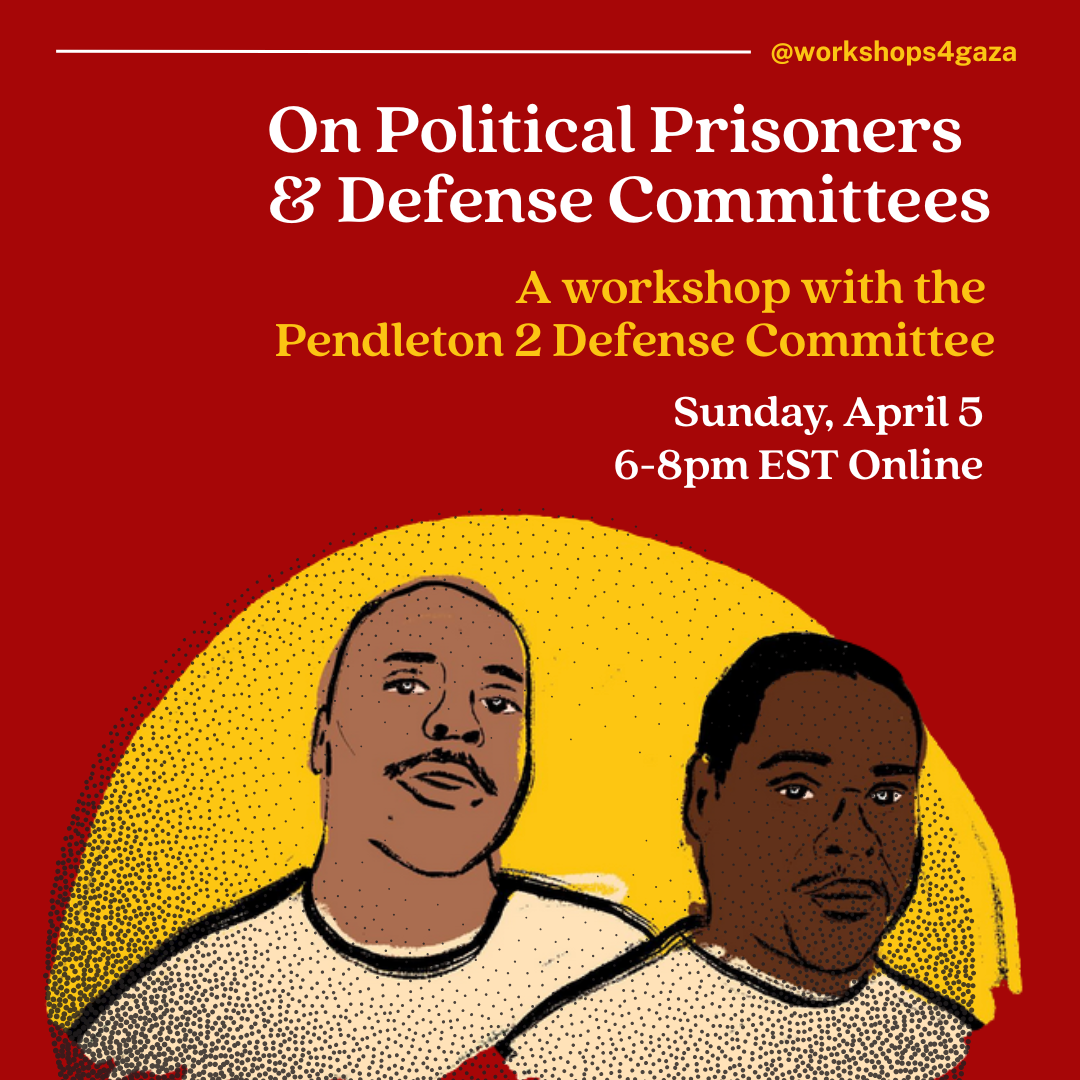
Step 1: Donate to P2 Defense Committee here (sugg. donation $40)
Step 2: Register for “On Political Prisoners & Defense” here”
What is the difference between supporting and defending political prisoners? Come learn from members of the Pendleton 2 Defense Committee, who will discuss the Pendleton 2 case, how the defense committee was formed, as well as what political principles and strategies have grounded and guided their work. Participants will have the opportunity to hear a few words directly from the prisoners themselves, as well as learn how to plug into ongoing efforts to free them.
Christopher “Naeem” Trotter served four years in the u.s. military as a young man, only to return home in 1983 and catch a case for his first ever offense of petty theft. He was three months away from being released and was looking forward to reuniting with his family and meeting his newborn daughter when he stood up to save his friend during the 1985 Pendleton Uprising. He was sentenced to 142 years, 20 of which he endured in solitary confinement. In 2021, his sentence was vacated, but the re-sentencing judge handed Naeem a new sentence of 122 years. Naeem is a mentor to younger prisoners and an avid chess player.
John “Balagoon” Cole was born in Indianapolis, IN on November 17th, 1959. He was sent to Indiana State Prison (Michigan City) in 1979 where he was politicized by other prisoners and was subsequently transferred to the Indiana State Reformatory in 1984. For his role in the 1985 Uprising, he was sentenced to 84 years, 32 of which he endured in solitary confinement.
Too Black is a poet, scholar, organizer and filmmaker who blends critical analysis with biting sarcasm. He is the co-author of Laundering Black Rage: The Washing of Black Death, People, Property, and Profits and host of the Black Myths Podcast, a podcast debunking the BS said about Black people. He is a member of the Defense Committee to Free the Pendleton 2 and is also co-director of the documentary film The Pendleton 2: They Stood Up.
maya (they/she) is an abolitionist organizer and a member of the Pendleton 2 Defense Committee. They are also a member of Black Alliance for Peace Midwest, a trained grief & death doula who supports harm reduction/destigmatized drug use, and an aspiring nurse.
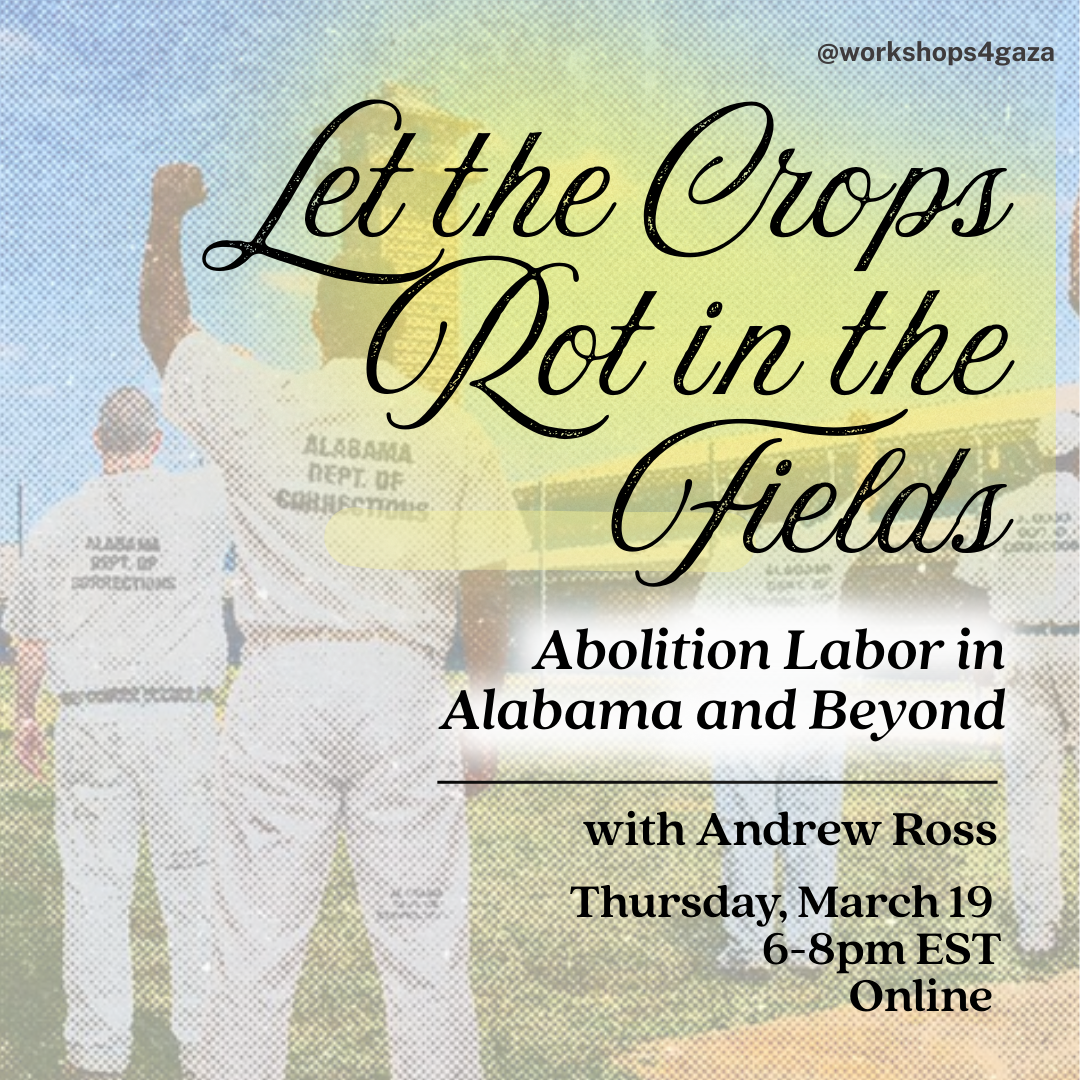
Let the Crops Rot in the Fields: Abolition Labor in Alabama and Beyond
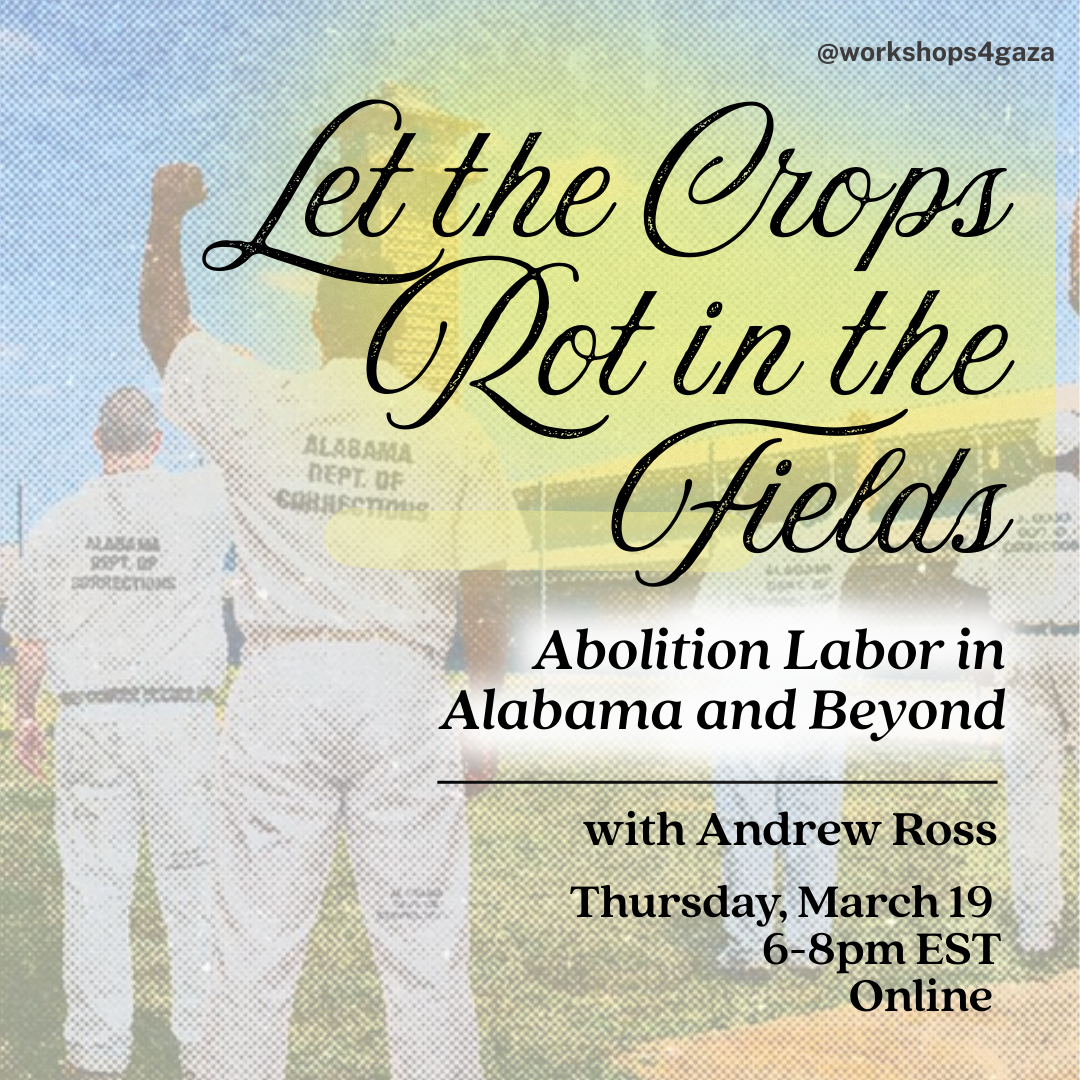
Step 1: Donate to Michael Kimble here (sugg. donation $40)
Step 2: Register for “Let the Crops Rot in the Field” here
What role do strikes and work stoppages play as modes of militant collective resistance behind prison walls? If corporate profits are not the main drivers of mass incarceration in the so-called u.s., what accounts for the continued persistence of prison work stoppages and labor strikes into the present day? How do incarcerated people understand the role that their own labor plays in upholding the prison system?
Drawing on the history and present demands of the Free Alabama Movement, a prisoner rights group that organized one of the largest prison strikes in u.s. history beginning in 2016, this workshop will attempt to broaden and complicate our understanding of prison labor in the Amerikan prison system, as well as the human agency that its withholding can restore to incarcerated people. Participants will receive a list of short readings to engage with before and after the workshop.
Andrew Ross is an activist and professor at NYU, where he helps direct the Prison Research Lab. Ross has written on a wide variety of topics, from labor, incarceration, urbanism, politics, and technology, to environmental justice, music, and film. He is the author of numerous books, including Abolition Labor: The Fight to End Prison Slavery (Orr Books, 2024), which chronicles the national movement to end forced labor, much of it unpaid, in American prisons.
Resistance Embroidery
Step 1: Donate to Sameer here (sugg. donation $40)
Step 2: Register for “Resistance Embroidery” here
In a time when propaganda has usurped language with the help of the mainstream media, it has become incumbent upon us to use our hands, voices and bodies to resist the psychopathy of zionism and its enablers, and communicate the everyday reality of Palestinians living under occupation and annihilation, including via cultural resistance. Inspired by the traditional Palestinian art form of Tatreez and testimonies, resistance embroidery tells the stories of Palestinians in their own words.
Participants in this workshop will learn how to embroider text and simple portraits in the shape of bookmarks on fabric in three progressive sessions. We will use our hands to replace propaganda with testimonies. All participants will be sent a list of materials to purchase beforehand, as well as templates to follow along with during the live sessions.
Priti Gulati Cox is an artist who has worked in mixed media since she moved to the so-called u.s. in 2000 from India. In 2018, during the Great March of Return protests in Occupied Palestine, she started working on documenting "Israel's" atrocities via embroidery, inspired by Tatreez. She did this from a guerrilla space she called 'The Sidewalk Museum of Congress' which was located outside her congressional rep's office in Salina, Kansas. She finished this project at the end of 2024, and since January of this year she has been working on embroidering the words and portraits of Palestinians and their supporters, and selling the pieces with proceeds going to The Sameer Project, a mutual aid initiative run by Palestinians in Gaza.
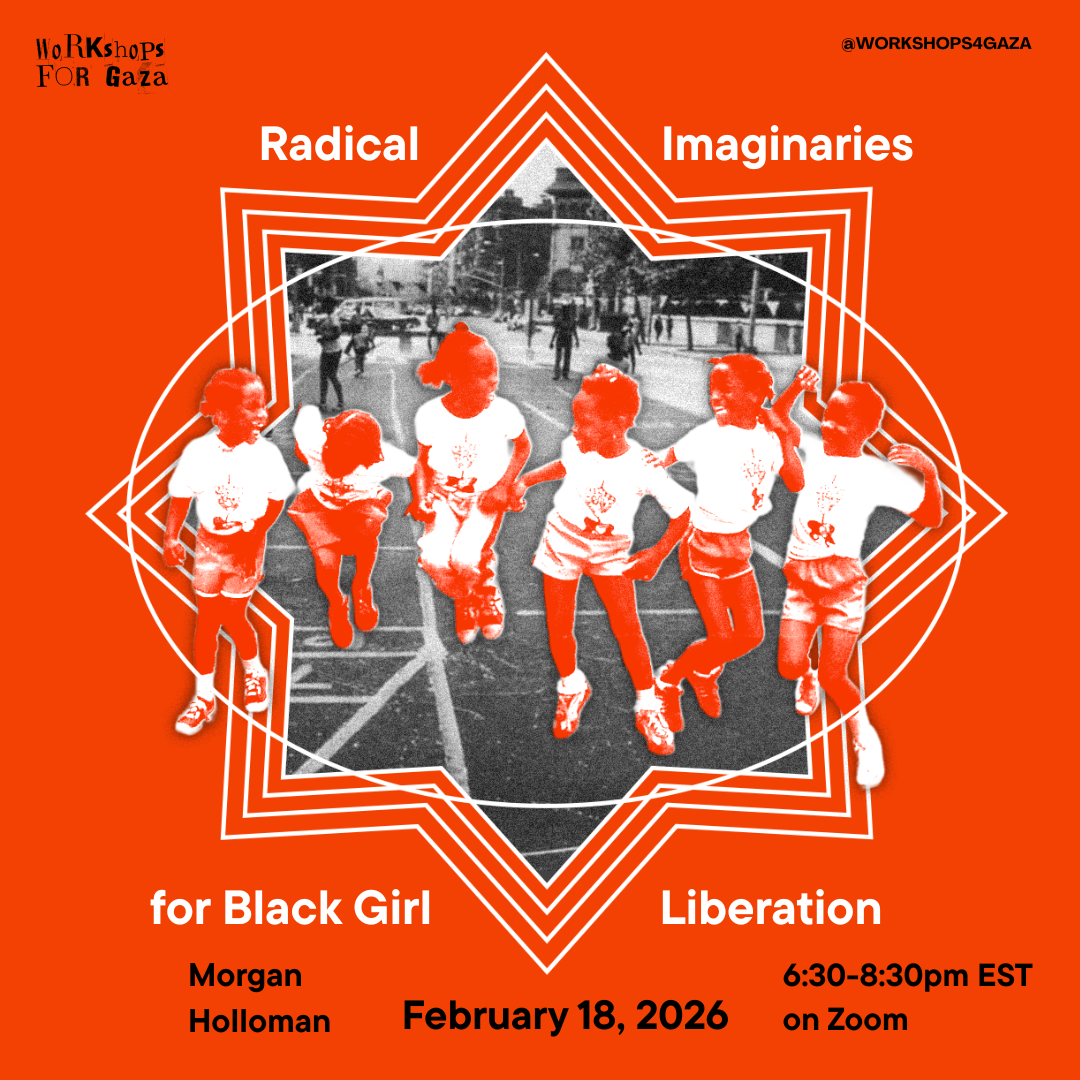
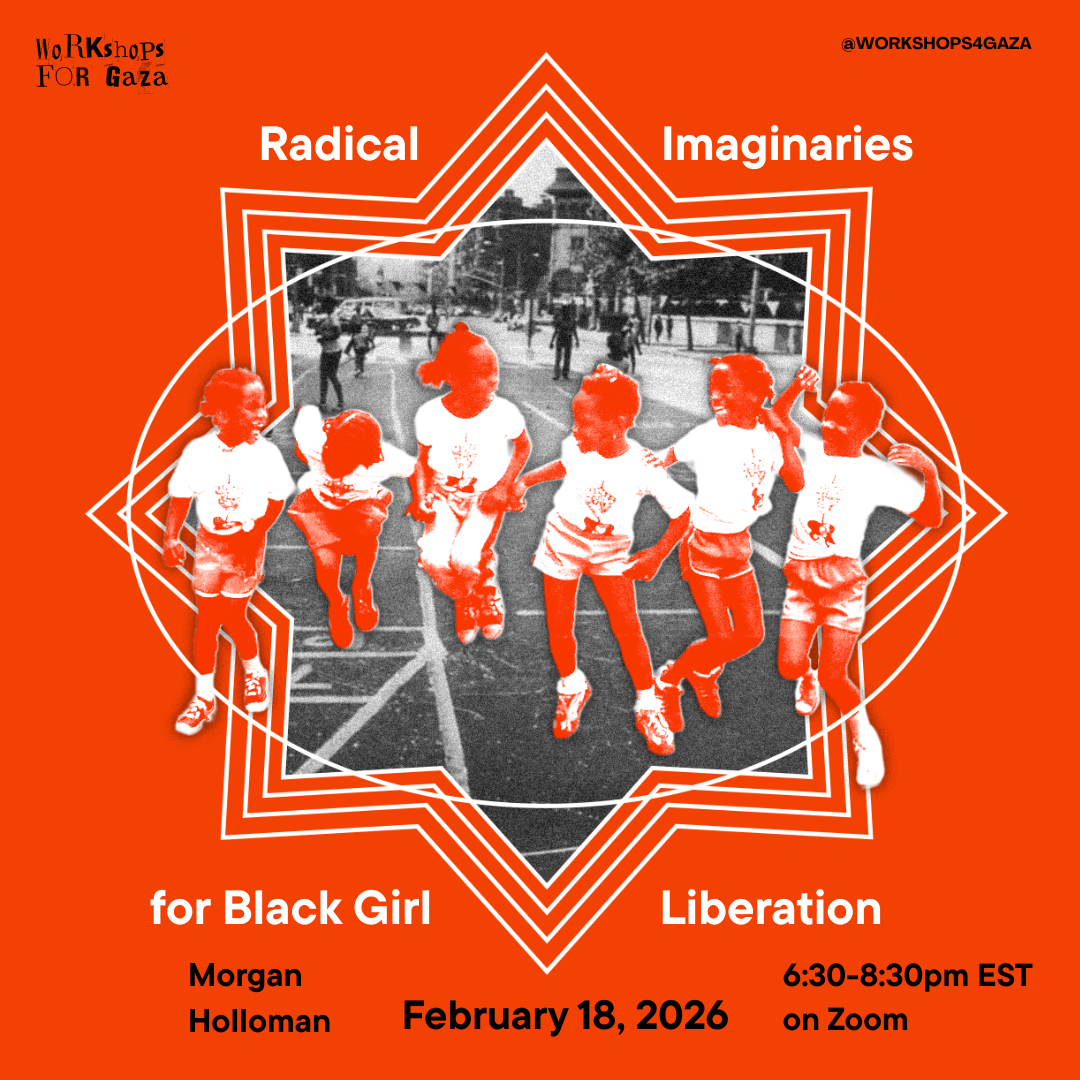
Radical Imaginaries for Black Girl Liberation
Step 1: Donate to Sameer here (sugg. donation $40)
Step 2: Register for “Radical Imaginaries for Black Girl Liberation” here
This workshop explores how Black girls have always imagined freedom outside of systems that were never built for them. Through the lens of Black feminist thought, speculative fiction, and grassroots histories, we’ll dig into the radical visions that Black girls create in the face of violence, erasure, and control. Participants will engage with texts, art, and oral histories to imagine liberatory futures and build solidarity with struggles for Palestinian freedom.
Morgan Holloman is a community organizer, mom, and founder of Black Girls Know Best, a black feminist cultural and community organization supporting the holistic wellness, safekeeping and education of black girls and gnc young people. As a daughter of the south and a student of liberation movements, she’s committed to organizing for a Free Palestine, Congo, Sudan and a word where all oppressed peoples are free and well.
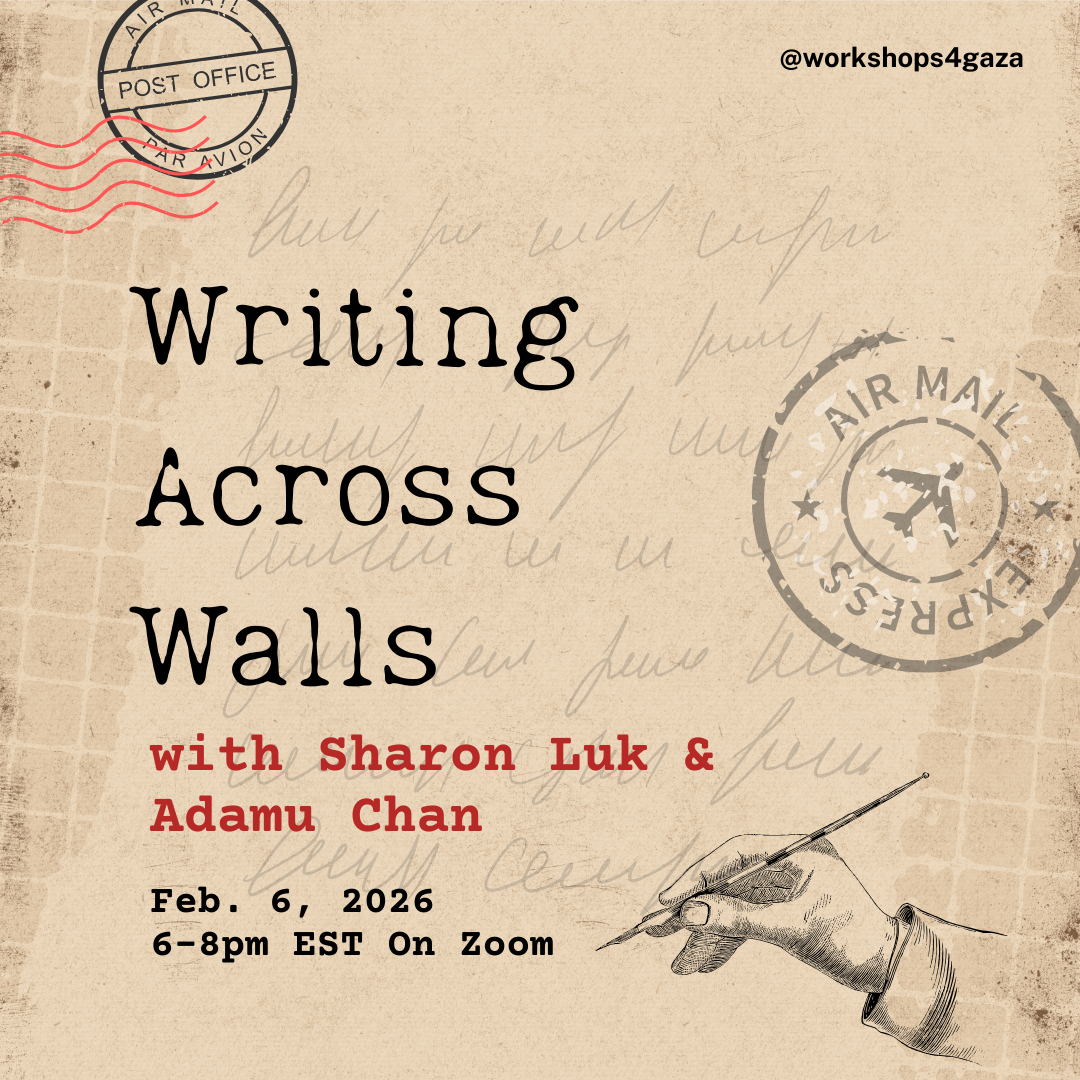
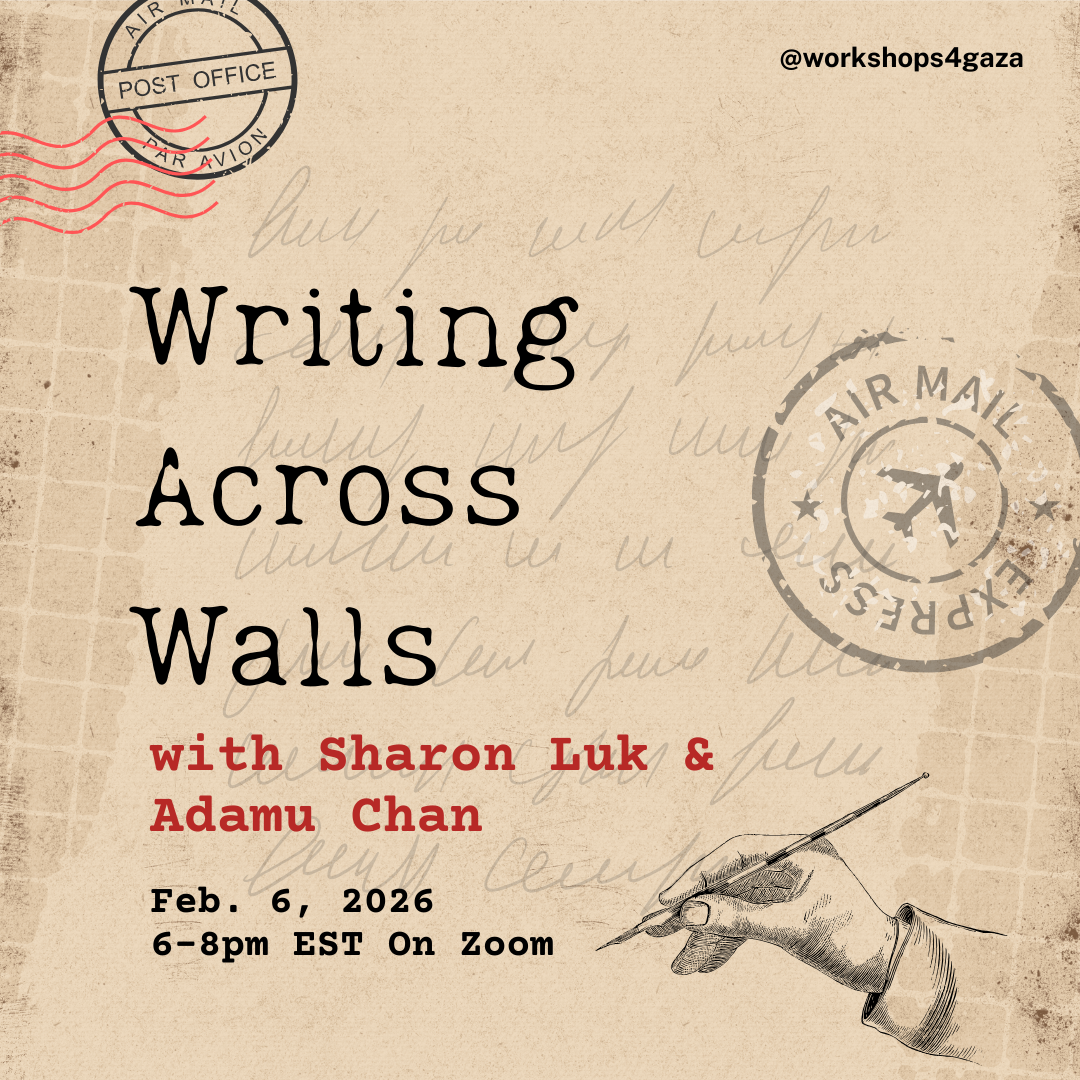
Writing Beyond Walls
Step 1: Donate to Sameer here (sugg. donation $40)
Step 2: Register for “Writing Beyond Walls” here
In this workshopm we will discuss some foundational questions and issues that people commonly encounter when initiating correspondence with contemporary political prisoners. What might we write in a first letter?
How might we navigate the power dynamics that prisons create between those on the inside and the outside? What tensions exist between intimacy and instrumentality when it comes to prisoner correspondence? How might we navigate communication under intense surveillance and censorship without overly censoring ourselves?
During the workshop and to anchor the conversation, participants will also watch “What These Walls Won’t Hold,” a documentary that chronicles the organizing and relationships of people who came together beyond the separations created by incarceration, in response to the COVID-19 outbreak at San Quentin State Prison.
Sharon Luk was born and raised in the San Francisco bay area. Before pursuing an academic career, she worked mainly in fields of independent media and youth and community development, with training in domestic violence counseling and non-discursive techniques in abuse recovery. Prof. Luk is currently an associate professor and Tier II Canada Research Chair in Geographies of Racialization at Simon Fraser University in Vancouver, BC. She is author of The Life of Paper: Letters and a Poetics of Living Beyond Captivity (University of California Press, 2018) and numerous articles.
Adamu Chan is an award-winning filmmaker, writer, and community organizer from the Bay Area whose artistry is deeply rooted in relationships & lived experience. His films invite viewers into conversations about social justice and the transformative power of community. He received the Docs in Action Film Fund from Working Films and directed What These Walls Won’t Hold, a personal exploration of resistance and solidarity during his incarceration.

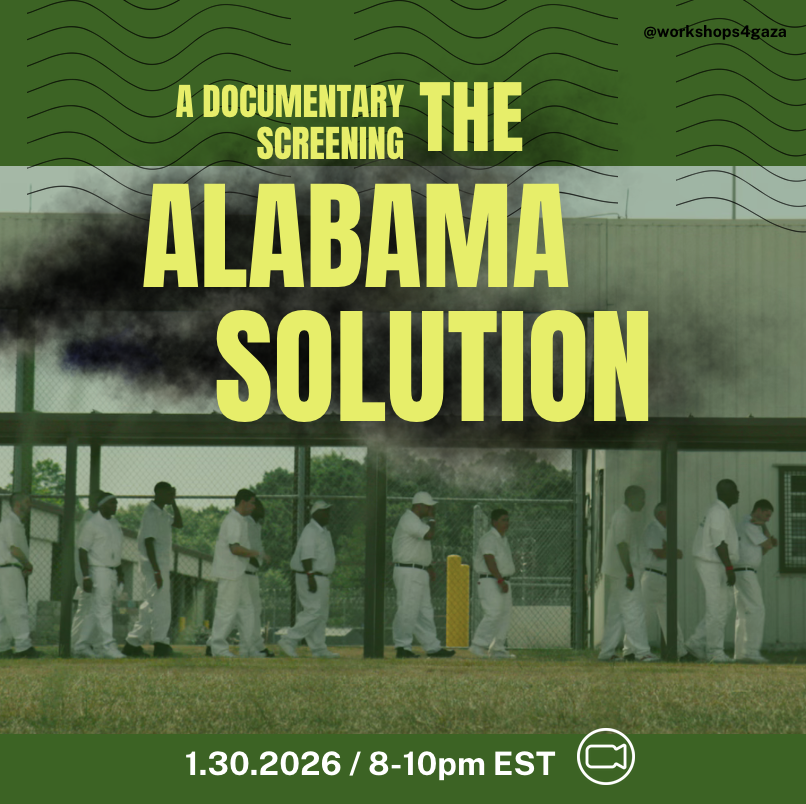
The Alabama Solution: A Documentary Screening
Step 1: Donate to Michael Kimble here (sugg. donation $40)
Step 2: Register for “The Alabama Solution” here
Join the Providence chapter of the Jericho Movement and supporters of the Free Michael Kimble Campaign for a very timely screening of The Alabama Solution, a newly released documentary shot with contraband cellphone footage that exposes the horrific abuses within the Alabama prison system.
The documentary features incarcerated activists Robert Earl Council and Melvin Ray, co-founders of the Free Alabama Movement, an inmate rights group that organized one of the largest prison strikes in u.s. history, and in which political prisoner Michael Kimble has played a crucial role.
Following the screening, we will be hosting a live discussion with several prisoner solidarity organizers as well as local organizers from Alabama. All proceeds from this workshop will go toward Michael Kimble to support his commissary fund, legal expenses, and other needs.

Revolutionary Prison Poetry
Step 1: Donate to Da3m Support here (sugg. donation $40)
Step 2: Register for “Revolutionary Prison Poetry” here
From Egypt to El Salvador to the so-called "US," captured revolutionaries have written poetry in defiance of the state's attempt to bury their spirit, and to connect with the communities they have been separated from.
In this workshop, we will read poems written in prison by militant organisers, write our own poems through prompts based off of theirs, and consider the lessons these prisoners offer us for building and sustaining movements with teeth.
We will end by writing messages of support to the current cohort of UK anti-zionist and abolitionist political prisoners that the british state has locked up in an attempt to scare us back into ineffective forms of protest. Let's build a movement worthy of their sacrifices! Free them all!
The workshop will be 2 hours, with a ten minute comfort break. There will be no obligation to read aloud what you have written on the workshop.
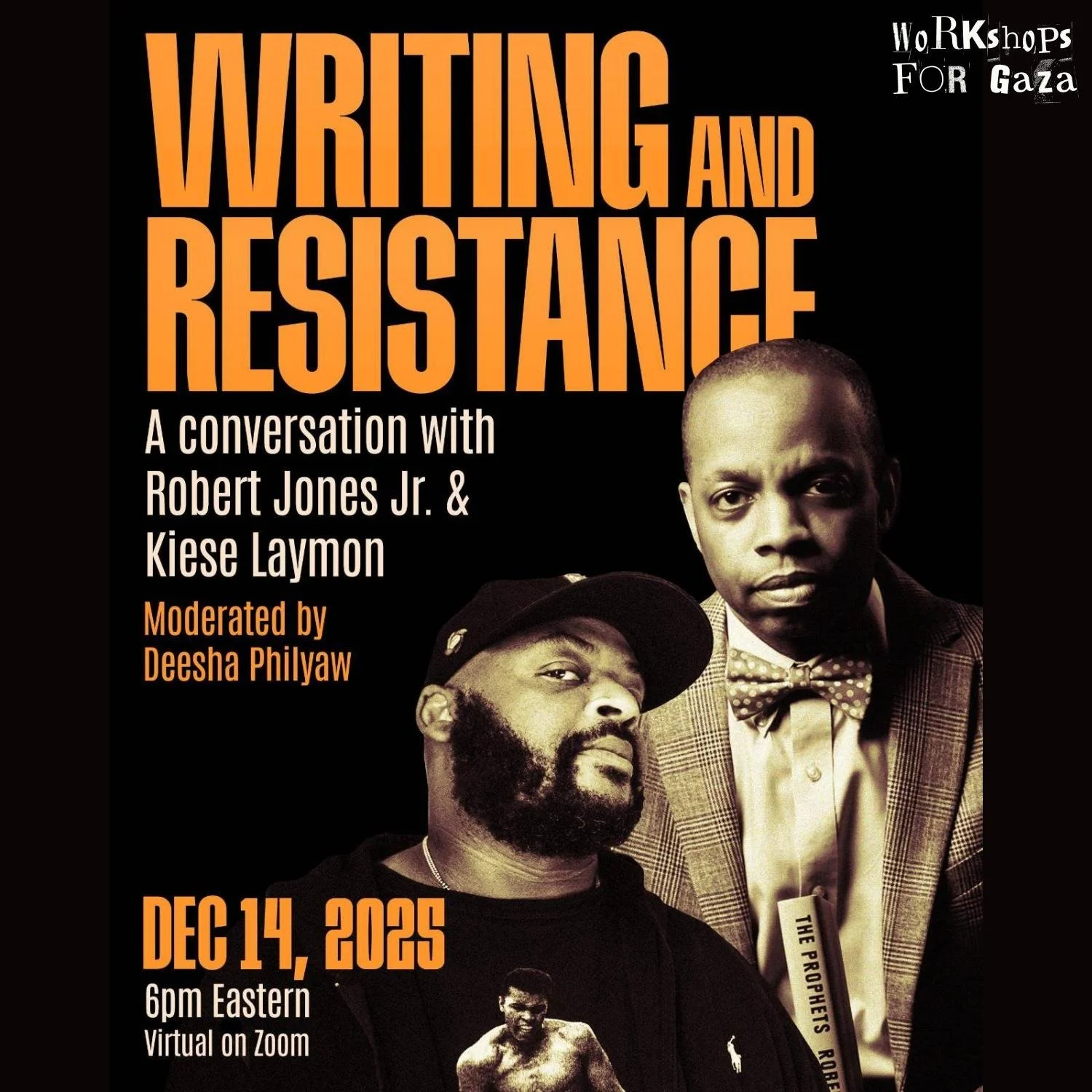
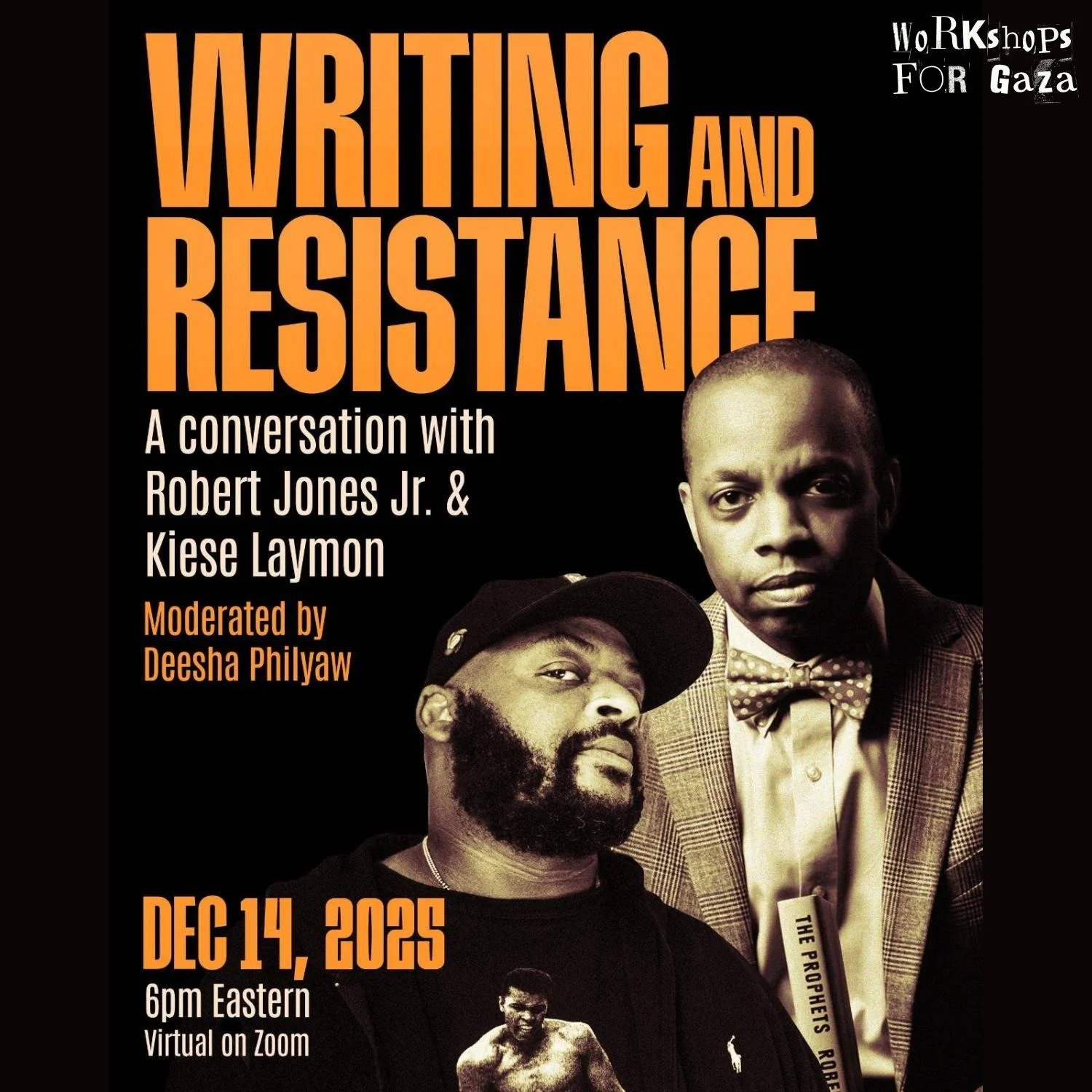
Writing and Resistance: Robert Jones Jr. & Kiese Laymon
Step 1: Donate to Sameer Project here (sugg. donation $40)
Step 2: Register for “Writing and Resistance” here
In this workshop, writers Robert Jones Jr. and Kiese Laymon will join us for a generative conversation on the roles and responsibilities of writers undertaking the work of resistance, truth-telling, and community care. The conversation will be moderated by Deesha Philyaw and will include a brief audience Q&A.
Robert Jones, Jr. (formerly known as “Son of Baldwin”) is a Brooklyn-based writer and public speaker. He is the author of The New York Times bestselling novel, The Prophets, which won the 2022 Publishing Triangle Edmund White Award for Debut Fiction, was a finalist for the 2021 National Book Award for Fiction, and was named one of “The 25 Most Influential Works of Postwar Queer Literature” by The New York Times.
Kiese Laymon is a Black southern writer from Jackson, Mississippi. Laymon is the Libbie Shearn Moody Professor of English and Creative Writing at Rice University. Laymon is the author of Long Division, which won the 2022 NAACP Image Award for fiction, and the essay collection, How to Slowly Kill Yourself and Others in America, named a notable book of 2021 by the New York Times critics. Laymon’s bestselling memoir, Heavy: An American Memoir, won the Andrew Carnegie Medal for Excellence in Nonfiction, the Christopher Isherwood Prize for Autobiographical Prose, the Barnes and Noble Discovery Award, the Austen Riggs Erikson Prize for Excellence in Mental Health Media, and was named one of the 50 Best Memoirs of the Past 50 Years by The New York Times. Kiese Laymon was awarded a MacArthur Fellowship in 2022.
Deesha Philyaw is the author of The Secret Lives of Church Ladies, which won the 2021 PEN/Faulkner Award for Fiction, the 2020/2021 Story Prize, and the 2020 LA Times Book Prize: The Art Seidenbaum Award for First Fiction and was a finalist for the 2020 National Book Award for Fiction. Deesha is a Kimbilio Fiction Fellow, a Baldwin for the Arts Fellow, a United States Artists Fellow, and co-host of two podcasts, Ursa Short Fiction (with Dawnie Walton) and Reckon True Stories (with Kiese Laymon).
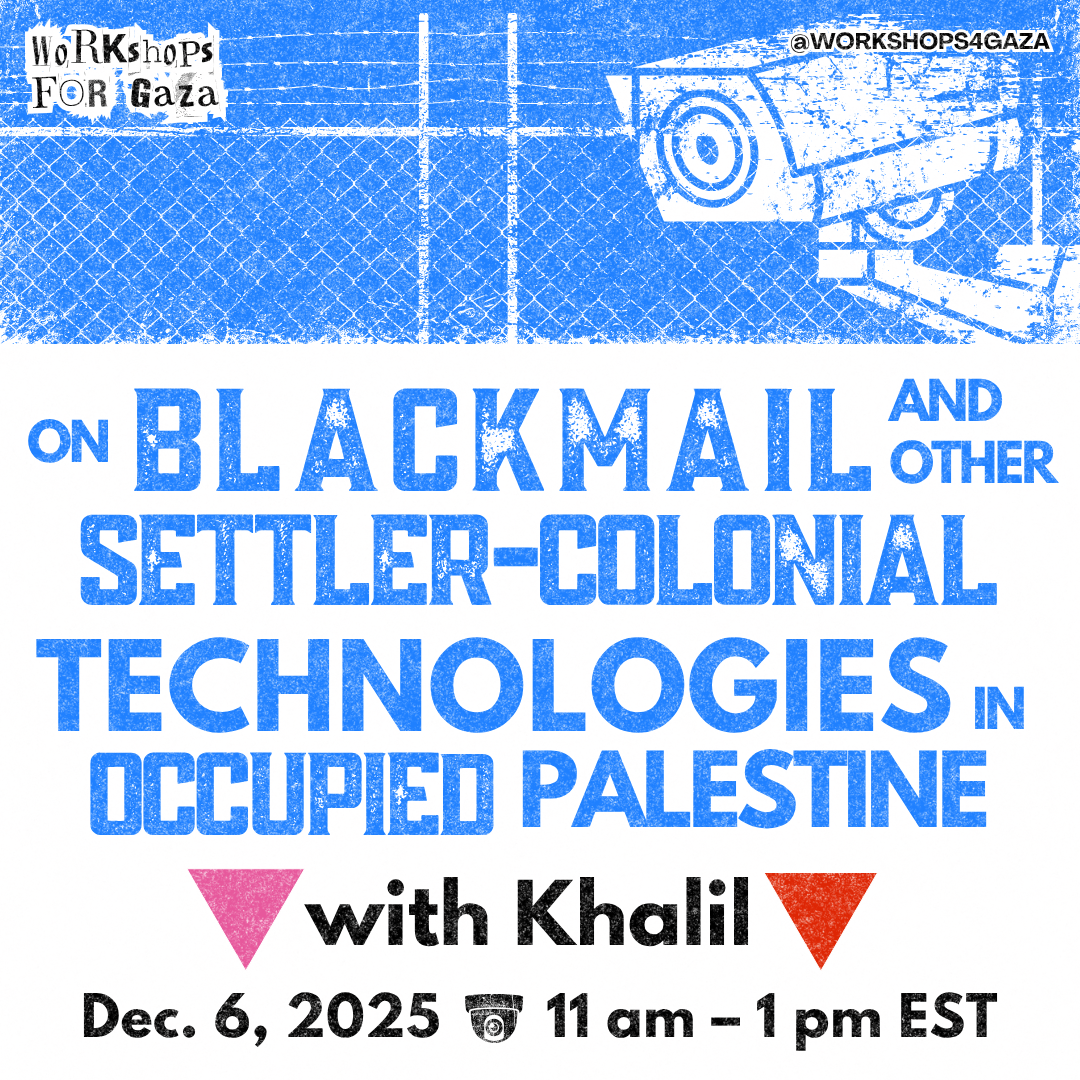
On Blackmail and Other Settler Colonial Technologies in Occupied Palestine

Step 1: Donate to Sameer here (sugg. donation $40)
Step 2: Register for “On Blackmail and Other Settler Colonial Technologies in Occupied Palestine” here
In this workshop, scholar and organizer Khalil will discuss technologies of control, discipline and surveillance in the context of occupied Palestine, as well as their implications for other colonial contexts.
Expanding on the established discourses of "pinkwashing" in the context of the israeli occupation, Khalil will discuss the use of blackmail as a settler-colonial technology specifically wielded against queer, disabled, and other minority groups within Palestine.
Participants will have the opportunity to ask questions and draw connections between technology and settler colonialism in their day to day observations and experiences, as well as discuss how we can fight back against these carceral infrastructures in practical ways.
Khalil is a Moroccan-French artist and PhD candidate in Security, Conflict, and Human Rights at the University of Exeter researching "Blackmail, Framing, and Technological Practices" in the Palestinian context. Khalil's research seeks to highlight the continued use of blackmail in Israeli settler-colonialism as a technique of control and is situated at the intersection of settler colonial studies, queer studies and critical security studies, and seeks to utilize investigative aesthetics (visuality and visualization) as a means’ of producing knowledge.

When Only God Can See: The Faith of Muslim Political Prisoners

Step 1: Donate to Sameer here (sugg. donation $40)
Step 2: Register for “When Only God Can See” here
In this workshop, Dr. Asim Qureshi and Dr. Walaa Quisay will discuss the experiences of Muslim political prisoners held in Egypt as well as in Guantanamo Bay and other detention black sites in the context of the Global War on Terror.
In the context of imprisonment, faith for Muslim prisoners becomes more than a spiritual connection to God; it is also a weapon of resistance and political contestation against state authorities and the prison system at large.
Participants will be invited to ask questions and make connections to our current political context and the increased repression against people everywhere who are criminalized by US empire.
Be sure to also purchase When Only God Can See from our bookstore, where all proceeds are donated to the Sameer Project.
Dr. Walaa Quisay is a cultural anthropologist and scholar of religion at the School of Divinity at the University of Edinburgh. She researches the carceral practices and theologies, subject formations, and meaning-making practices of Muslim communities.
Dr. Asim Qureshi is the Research Director at the advocacy group CAGE Intl, and since 2003 has specialized in investigating the impact of counterterrorism practices worldwide. Since 2009, he has been advising legal teams involved in defending terrorism trials in the US and in Guantanamo Bay, Cuba.

Organizing with Political Prisoners 101

Step 1: Donate to José here (sugg. donation $40)
Step 2: Register for “Organizing with Political Prisoners” here
In this workshop, members of the Xinachtli Freedom Campaign will discuss their organizing work with Xinachtli, a political prisoner, artist and Chicano revolutionary who has been unjustly held in solitary confinement for over 20 years. They will share experiences and advice on how to organize with U.S. political prisoners as well as the importance of centering them in broader movement work.
Drawing on lessons from the New Afrikan Independence movement as well as the Palestinian National Liberation struggle, the Xinachtli Freedom Campaign will discuss the role that political prisoners have played historically and presently as leaders in our movement as well as in their own struggles for liberation.
As more of our comrades are captured each day, it is the duty of those of us who remain outside the prison walls to organize alongside them for their release, and to situate their fight for freedom as integral to the broader struggle against state repression that targets all working class and colonized people.
Maria is a teacher, community organizer, historian, and writer. Born in Mexico and raised in Texas, Maria has experienced the violence of the state’s racist government, leading to her involvement in political education, community organizing, and ultimately, political prisoners’ campaigns.
Jazz is a public health researcher, community organizer, writer, and poet. A lifelong Texan, they began organizing in elementary school against the U.S. invasion of Iraq, and have since continued to struggle against U.S. imperialism, racial capitalism, and the oppression of all colonized people—from the southern border to Palestine.
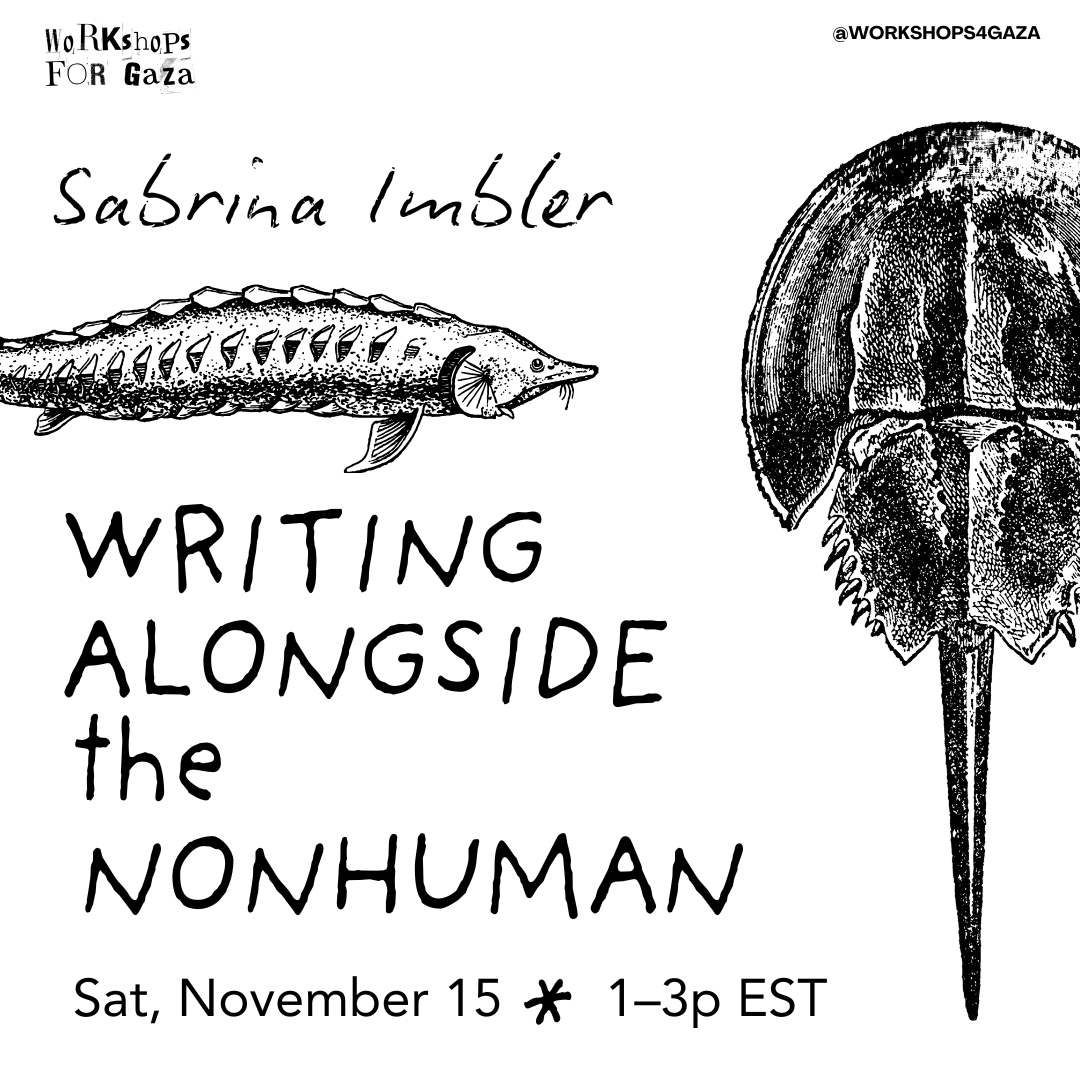
Writing Alongside the Nonhuman

Step 1: Donate to Sameer Project here (sugg. donation $40)
Step 2: Register for “Writing Alongside the Nonhuman” here
It is one thing to write about animals, plants, and other non-human beings, but what would it look like to write with them? In this workshop, we will explore how we can write towards a better understanding of non-human experiences while still respecting the gap between us. We will unpack anthropomorphism and imagine an ethics for our writing that extends beyond empathy, discussing work from Alexis Pauline Gumbs, Patricia Ononiwu Kaishian, and others.
Sabrina Imbler is a staff writer at Defector, a worker-owned site, where they cover creatures and the natural world. Their first full-length book, How Far the Light Reaches: A Life in Ten Sea Creatures (Little, Brown, 2022), won a Los Angeles Times book prize in science and technology. Their chapbook Dyke (Geology), was published by Black Lawrence Press, and selected for the National Book Foundation Science + Literature Program. Sabrina lives in Brooklyn.

Touring the Abyss: Unless and Care in the University

Step 1: Donate to Sameer Project here (sugg. donation $40)
Step 2: Register for “Touring the Abyss” here
We in the university live and work in a machine that makes us unwell while not allowing us to be unwell, punishes us for being unwell and asks us to punish others for being unwell so that we can prove we are well.
Dr. Mimi Khúc invites us to confront unwellness in the university together in a discussion of her book, dear elia: Letters from the Asian American Abyss, which traces the contemporary mental health crisis and its intersection with "compulsory wellness," the pressure to pretend we are always ok.
In response, Dr. Khúc offers a pedagogy of unwellness—the recognition that we are all differentially unwell and thus all in need of radical care. Join us to explore what a pedagogy of unwellness reveals for our university community and how we might begin to build the structures of care that we need.
If you are a student, staff, or faculty who would like to bring this workshop to your university, please get in touch with us! We are working with university-affiliated people to bring this workshop into classrooms, reading groups, programs, and student organizations, especially those who have access to institutional funds that can be funneled into urgent campaigns for the Sameer Project.
Dr. Mimi Khúc is a writer, scholar, and teacher of things unwell. She is the creator of the acclaimed mental health projects Open in Emergency and the Asian American Tarot, and the author of dear elia: Letters from the Asian American Abyss, a deep dive into the depths of Asian American unwellness at the intersections of ableism, model minoritization, and the university, and an exploration of new approaches to building collective care. She is currently coping with the terror of these times by collecting cats.

Sticking Together in Tough Times

Step 1: Donate to Wesam Water Project here (suggested $40)
Step 2: Register for “Sticking Together in Tough Times” here
We are all feeling the stresses of state repression, worsening living conditions, and terrifying threats to our well-being and others.’
In times like these, relationships are often strained, people feel impatient, scared, distrustful, and angry and it can come out in our groups and between organizers. Facing ecocide and fascism, we need each other more than ever, to care for each other and fight back.
This workshop will identify some common patterns of emotional activation and conflict that emerge in political organizing, and provide tools for how we can work with them in ourselves, with friends, and in our groups so that we can hold each other with care.
Dean Spade has been working in movements for queer and trans liberation, anti-militarism, and police and prison abolition for the past 25 years. He’s the author of Normal Life: Administrative Violence, Critical Trans Politics, and the Limits of Law, and Mutual Aid: Building Solidarity During This Crisis (and the Next) as well as the director of the documentary “Pinkwashing Exposed: Seattle Fights Back!” His new book is Love in a Fucked Up World: How to Build Relationships, Hook Up and Raise Hell Together, and he is the host of a new podcast with the same name.

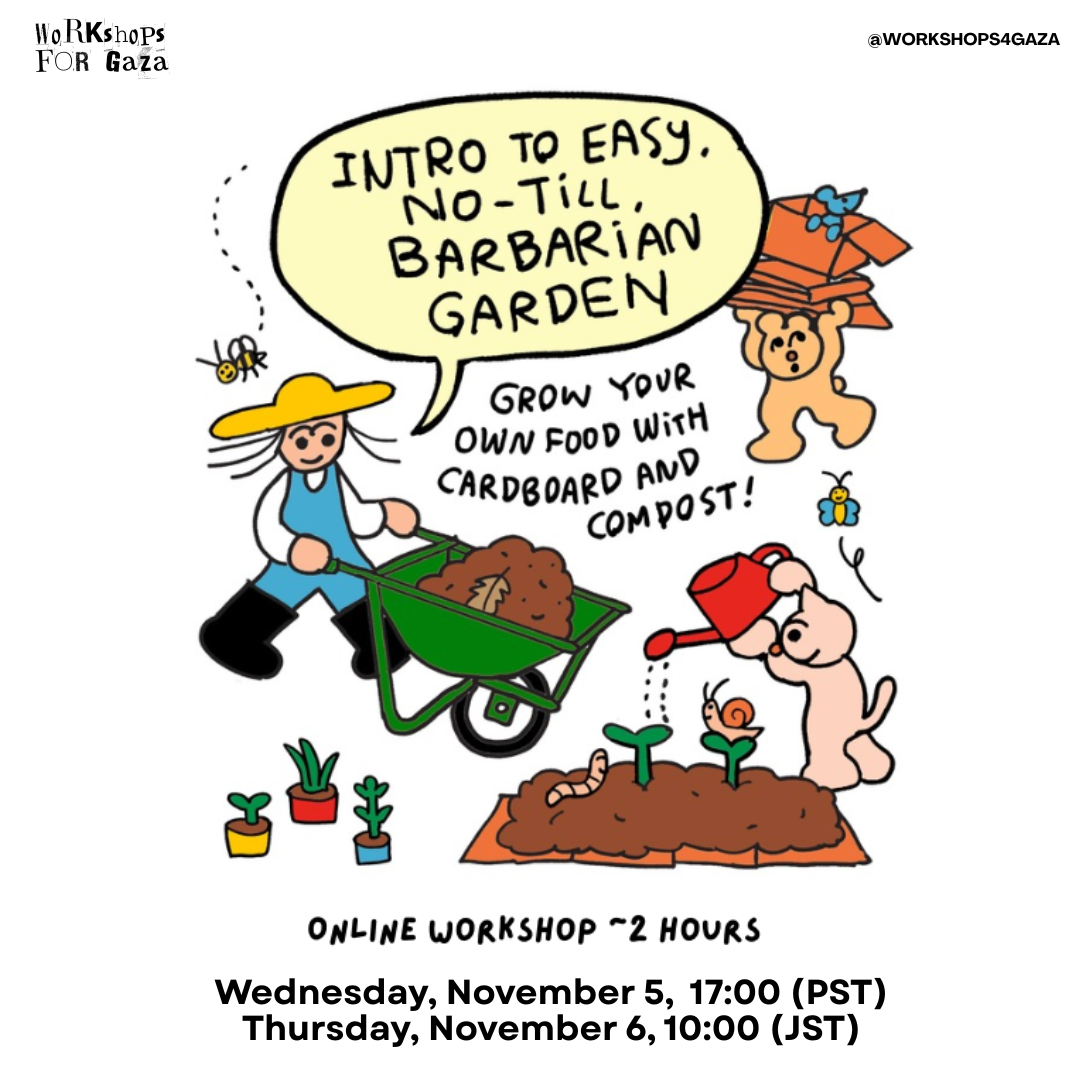
Intro to Easy, No-Till Gardening
Step 1: Donate to Thamra here (sugg. donation $40)
Step 2: Register for “Intro to Easy, No-Till Gardening” here
In this online workshop, Will from Barbarian Farm and the Institute of Barbarian Books will talk about the meaning (and challenges) of small-scale farming to the cultivation of spaces for radical politics in rural Japan.
In addition to walking participants through an easy to implement method of no-till farming that he has been experimenting with for the last few years, he will reflect on the short visit that he made to Om Sleiman farm in Bil’in, Palestine and how it has shaped his views on farm sovereignty struggles in Japan.
Finally, he will discuss the relationship between Barbarian Farms and the Institute of Barbarian Books, which is an independent print shop, small publisher, and library that has played an important role in building pro-Palestinian, anti-zionist community in Hiroshima, Japan.

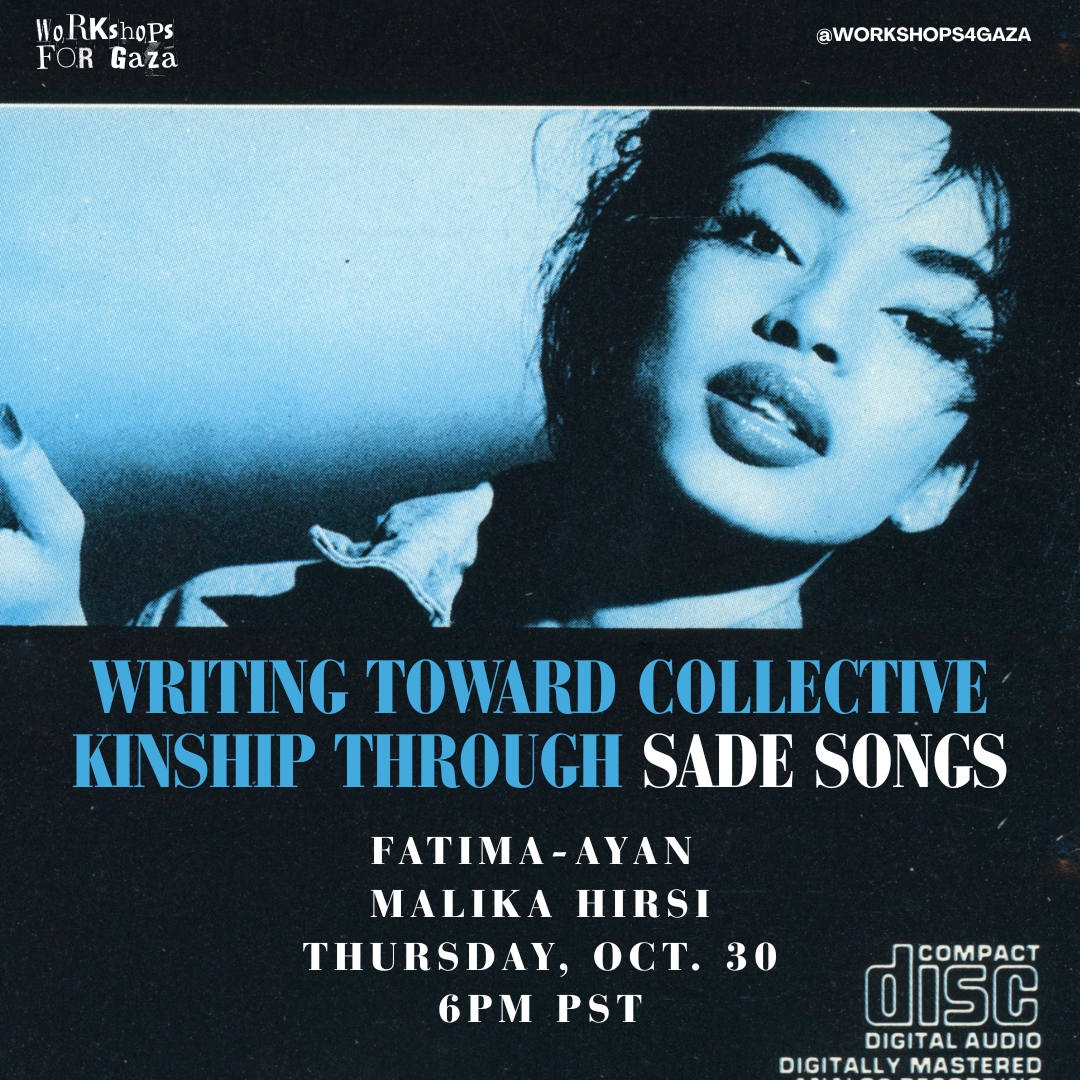
Writing Toward Collective Kinship Through Sade Songs
Step 1: Donate to Sameer Project here (sugg. donation $40)
Step 2: Register for “Writing Toward Collective Kinship” here
How do we cherish the day when empire tries to make us all kings of sorrow? This generative writing workshop invites participants to embrace vulnerability in service to being by each other’s sides. Let the music of Sade alchemize rage into reminders of ways we can hang on to our love for one another through every attack on each kiss of life.
Fatima-Ayan Malika Hirsi is a Black mother who spends time with forests and waters on unceded lands of the T’Sou-ke Nation. Her work strives to instigate action in service to world-building, social change, and collaboration. Her first full-length poetry collection, DREAMS FOR EARTH, arrives this fall from Deep Vellum.

Little Palestine Walking Tour

Step 1: Donate to Sameer Project here (sugg. donation $40)
Step 2: Register for “Little Palestine Walking Tour” here
Join Workshops4Gaza, Samar Hussaini, and members of SOMA for Palestine and SOMA Collective for Palestine for an in-person walking tour of “Little Palestine” in Paterson, New Jersey where we will explore local shops, restaurants, bakeries to learn about the culture and community of one of largest Palestinian communities in the United States and talk with local community members.
The final stop of the walking tour will be a local Palestinian grocery store, where participants will be given a handout with several traditional Palestinian recipes and a shopping list of ingredients to buy if they wish.
The walking tour will run approximately four hours in total and is intended for participants aged 12 and above.
Participants should arrange their own transportation to Paterson, NJ, and meeting point will be shared upon registration. They should also bring $40 cash or Venmo to cover the cost of food.
Samar Hussaini is a Palestinian artist based in New Jersey, known for her
captivating artwork that blends various layers of mediums and techniques including traditional Tatreez embroidery and Palestinian patterns. Her work has been showcased in galleries, exhibits and shows around the world.
Samar will be joined by members of SOMA for Palestine and SOMA Collective for Palestine, a coalition of individuals and groups who live in South Orange and Maplewood, New Jersey, and engage in political education and community organizing in service of a liberated Palestine.

Medical BDS: On Boycotting Israeli Pharmaceuticals

Step 1: Donate to Sameer Project here (sugg. donation $40)
Step 2: Register for “Medical BDS: On Boycotting Israeli Pharmaceuticals” here
In this workshop, representatives from the Boycott Teva USA campaign will discuss the role of Israeli pharmaceutical manufacturing in medical apartheid and genocide in Palestine, focusing on the generic medication manufacturer Teva Pharmaceuticals.
Attendees will learn how to participate in the Teva boycott and work with their pharmacies ensure their prescriptions are non-Teva brand. Workshop hosts will share materials, strategies and educational resources on how to participate in the boycott and how to launch this campaign from anywhere.
Boycott Teva is the BDS arm of Healthcare Workers for Palestine, a collective of healthcare workers throughout the US committed to fighting the Israeli genocide of Palestine. We work with the original BDS Movement to support their Boycott Teva initiative. We are committed to a decolonized and liberated Palestine, an end to colonialism and Zionism, and economic and racial justice for all.

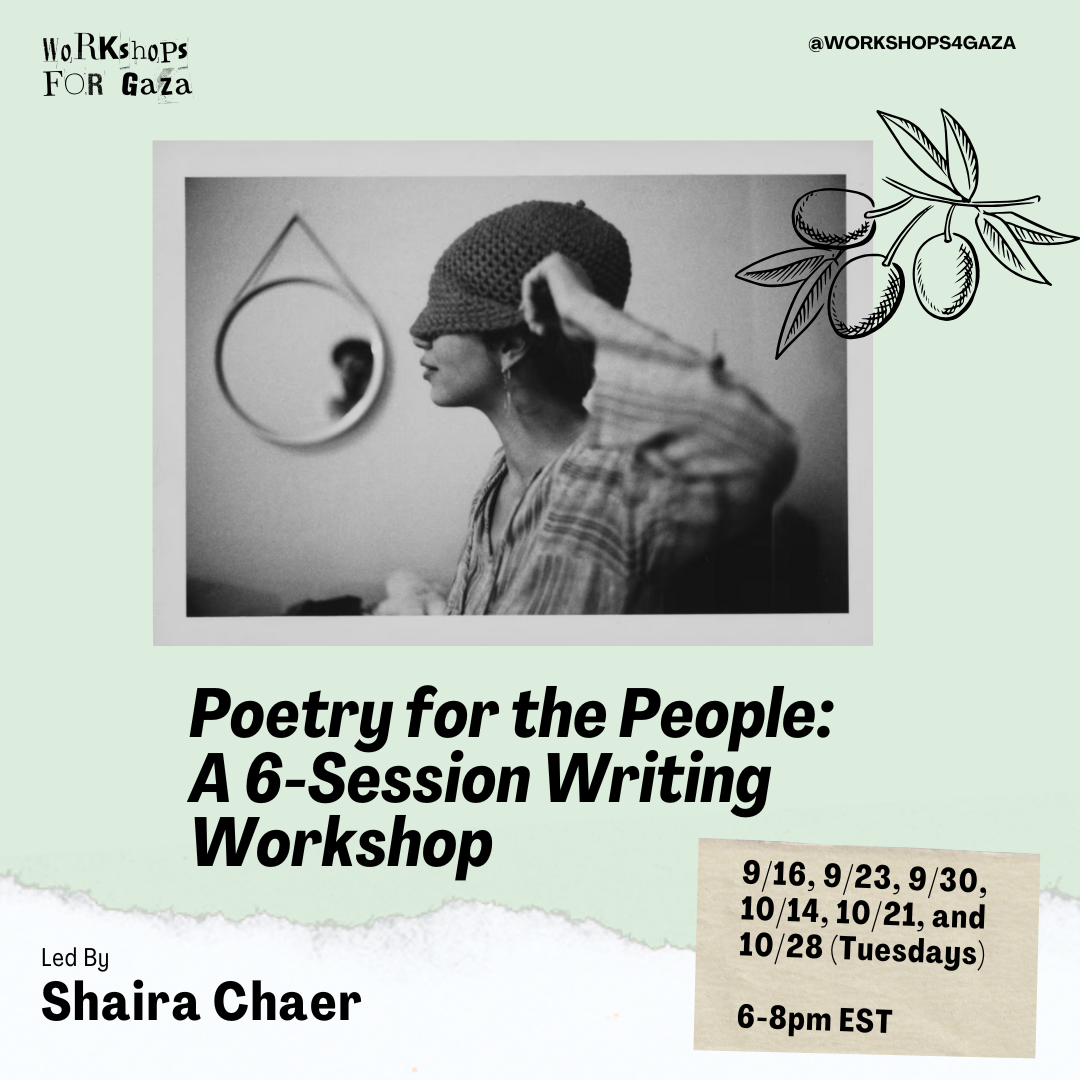
Poetry for the People: A 6-Session Writing Workshop
Step 1: Donate to Khalil’s family here (sliding scale $40-$100).
Step 2: Register for “Poetry for the People” here.
This writer's workshop series offers a respite for reengagement and rediscovery of our internal monologues; a space to unplug from the noise to (re)learn how to listen deeply to ourselves and the world through poetry and prose. Participants will read the works of Leanne Simpson, Fady Joudah, Leah Lakshmi Piepzna-Samarasinha, Mohammad El-Kurd, and many others across across themes of identity, homeland, decolonialism, reclamation, indigeneity, and transformation.
Across six 2-hour sessions, participants can expect a no-frills, rigorous environment where we will read, discuss, and critically engage with powerful texts meant to break us open. Expect plenty of individual and group writing using different styles and structures of creative writing, including responsive poetry, ekphrastic poetry, concrete poetry, elegies, odes, song lyrics, and improv.
Shaira Chaer is a multi-hyphenate creative born and raised on unceded Lenape land in the Bronx, New York. Their visual art, research and writing practices are informed by blending the living archive, autoethnography, queer radical futurity and the wisdom of their ancestors across Kiskeya-Ayiti and the Levant.
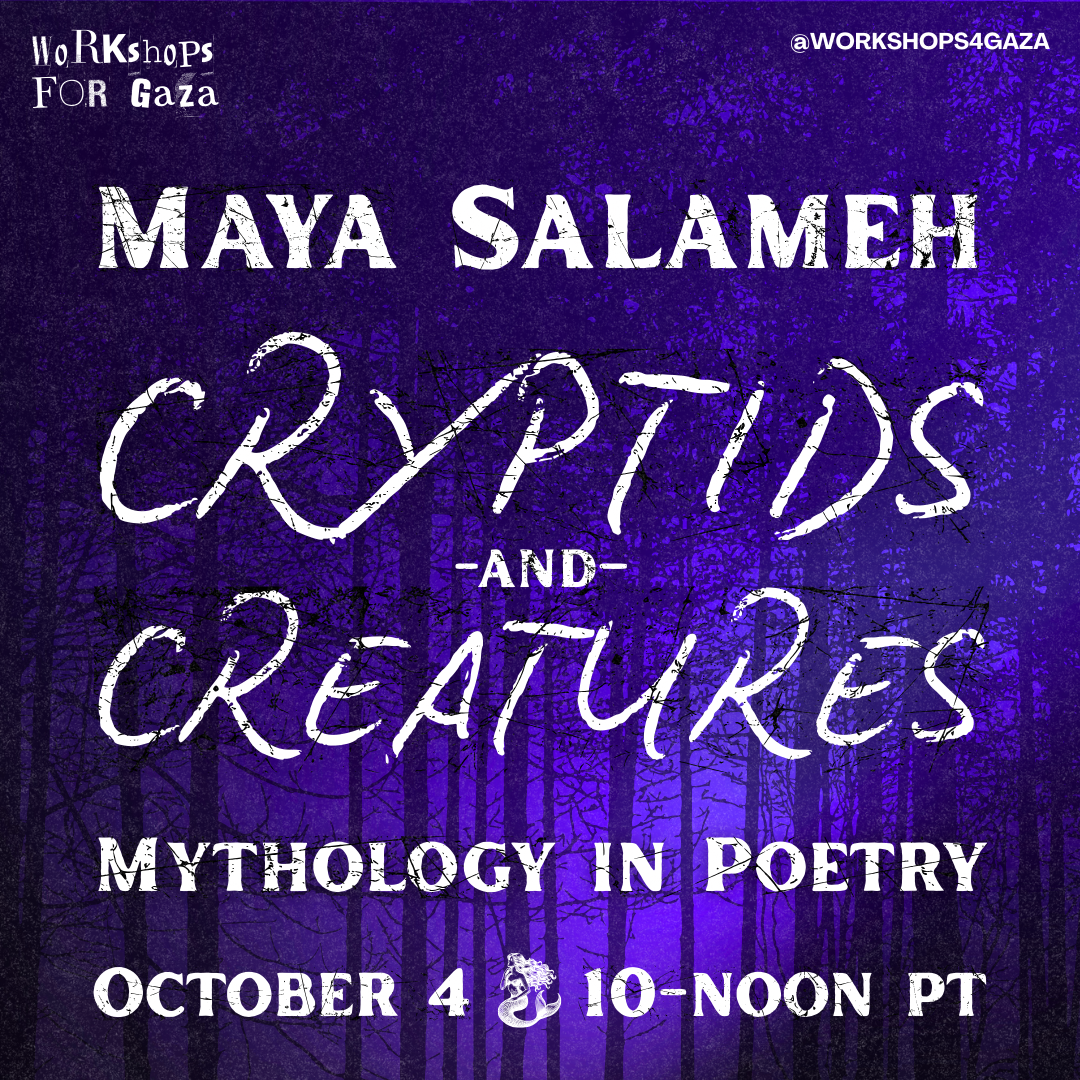
Cryptids and Creatures: Mythology in Poetry

Step 1: Donate to Sameer Project here (sugg. donation $40)
Step 2: Register for “Cryptids and Creatures” here
What role do cryptids and creatures like the Minotaur, the Mapinguari, or the Little Mermaid play in a poem? What do they allow writers to communicate about the myriad costs of being in this world characterized by colonial violence and slavery?
This workshop engages works by poets like Traci Brimhall, Natalie Diaz, and Summer Farah, whose mythical creatures unsettle understandings of loneliness, intimacy, sacrifice, and our relationships between past and present.
This will be an interactive space, where participants will write and share poems as cryptozoologists, architects, and memory workers. This workshop benefits the Sameer Project's North Gaza campaign.
Maya Salameh is the author of HOW TO MAKE AN ALGORITHM IN THE MICROWAVE (University of Arkansas Press, 2022), winner of the Etel Adnan Poetry Prize, and the chapbook rooh (Paper Nautilus Press, 2020). Her work has appeared in The Offing, Poetry, Gulf Coast, The Rumpus, AGNI, Mizna, and the LA Times, among others. She can be found at @mayaslmh or mayasalameh.com.
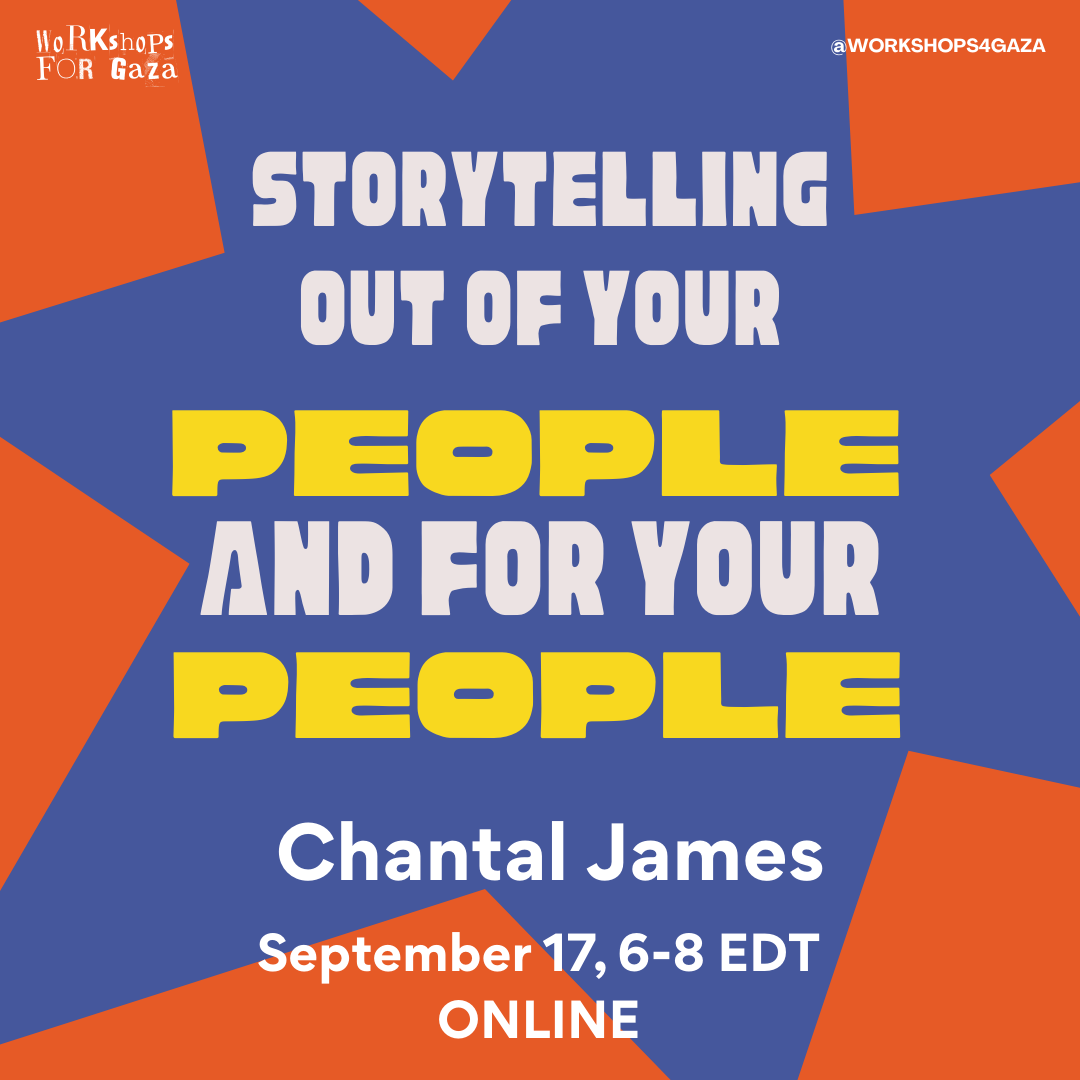
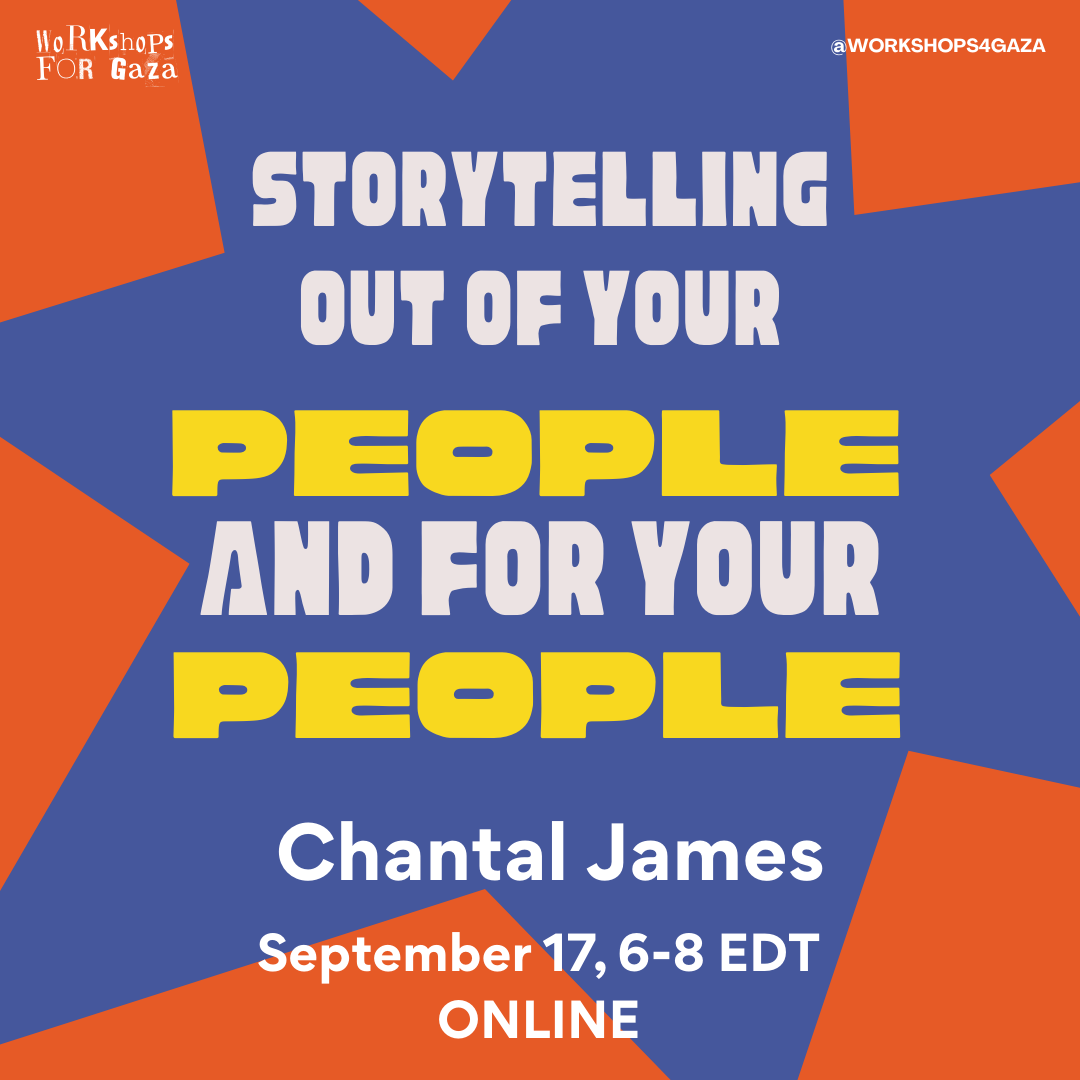
Storytelling Out of Your People and For Your People
Step 1: Donate to Sameer Project here (sugg. donation $40)
Step 2: Register for “Storytelling Out of Your People” here
Join novelist Chantal James in a generative workshop for fiction writers of all levels to think about writing in the role of griot or cultural worker--one who owes something to the community they come from and who writes out of that community.
Chantal will share from and discuss her novel NONE BUT THE RIGHTEOUS along with selections from other writers who seek to hold cultural memory in their work. We will discuss what drives us to write out of who we are and where we come from. Writers of all levels can expect to come away with ideas for new work, drafts, and projects to play with.
Chantal James lives in working-class Black Washington, DC, and has been published across genres—as a poet, fiction writer, essayist, and book reviewer—in such venues as The New Republic, Catapult, Paste Magazine, Harvard’s Transition Magazine, The Bitter Southerner, Obsidian, and Callalloo. Her honors include a Fulbright fellowship in creative writing to Morocco. Her 2022 novel NONE BUT THE RIGHTEOUS from Counterpoint Press was one of Kiruks' 10 most anticipated books of its year and a nominee for the John P. Leonard Prize for Best First Book from the National Book Critics Circle.
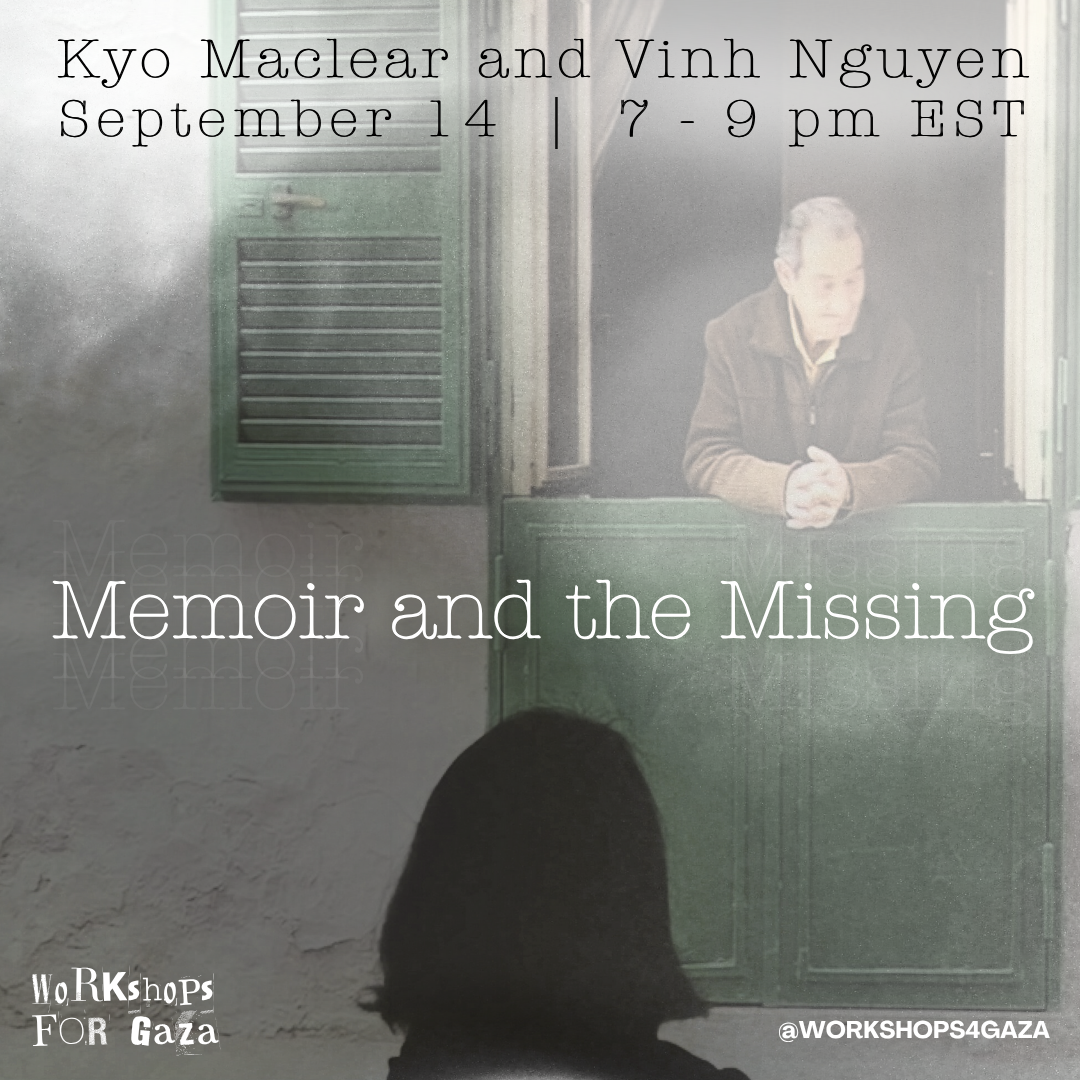
Memoir and the Missing

Step 1: Donate to Sameer Project here (sugg. donation $40)
Step 2: Register for “Memoir and the Missing” here
This workshop considers unavailable archives and missing evidence in life writing. How to write what’s not seemingly there, what’s not known or knowable? How do we make memoir from personal and historical absences? Through facilitated discussions, writing exercises, and sharing of resources, we will contemplate the limits of the memoir genre and explore strategies for working through, around, and against its conventions.
Kyo Maclear is the author of Birds Art Life: A Year of Observation (Scribner, 2017), Unearthing: A Story of Tangled Love and Family Secrets (Scribner, 2023).
Vinh Nguyen is the author of the speculative memoir The Migrant Rain Falls in Reverse (Counterpoint, 2025) the academic monograph Lived Refuge: Gratitude, Resentment, Resilience (UC Press, 2023).
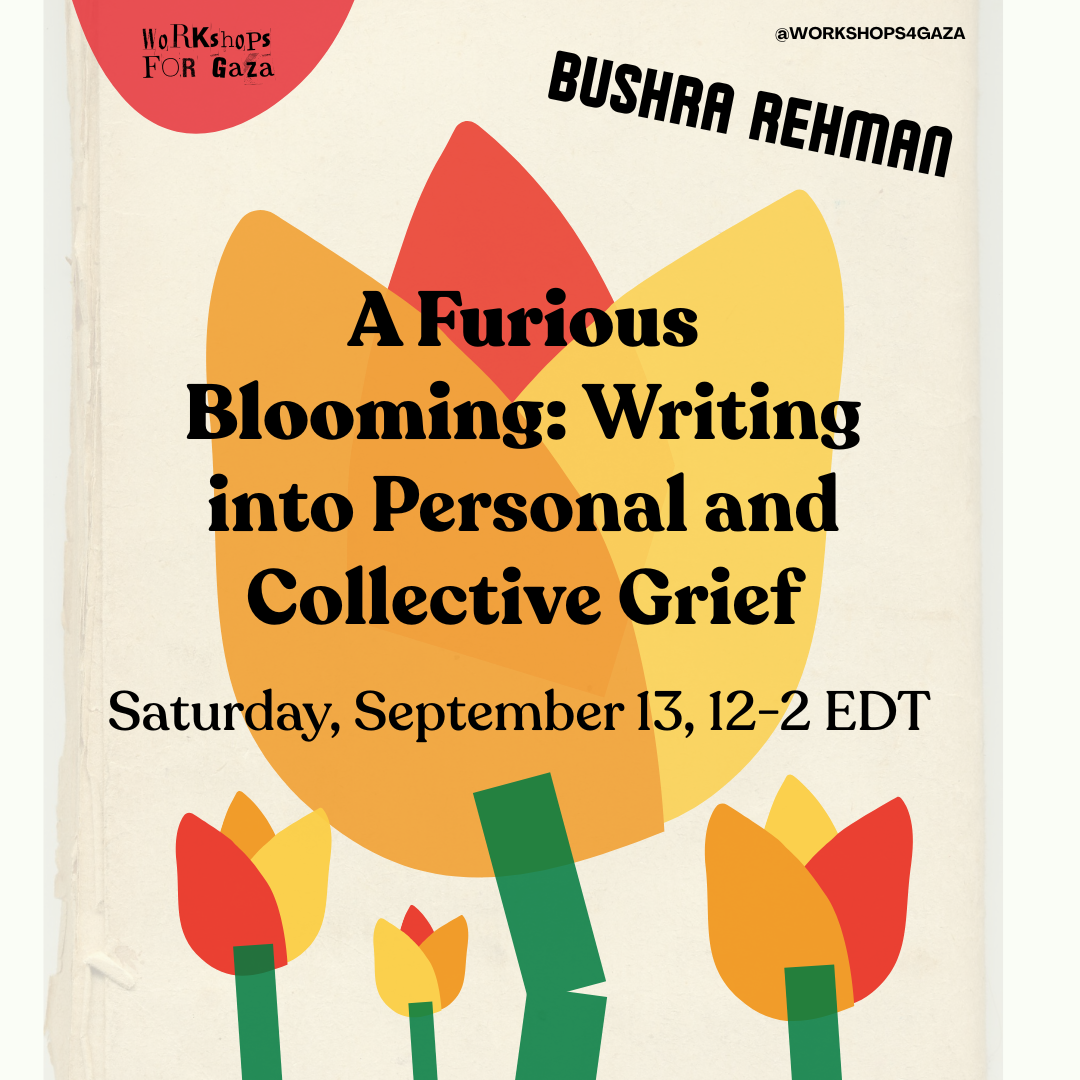
A Furious Blooming: Writing into Personal and Collective Grief
Step 1: Donate to Sameer Project here (sugg. donation $40)
Step 2: Register for “A Furious Blooming” here
Grief is a door into a different world where we are never the same. How do we write from these new selves? How can we lean into our writing practice to not only survive the storms of grief, but also the storms that are unleashed in those who we grieve alongside? In this workshop, we will find inspiration from writers who’ve broken through the boundary of the wordlessness to write of their grief.
Bushra Rehman is a writer, teaching artist and cultural activist. Rehman’s latest novel Roses, in the Mouth of a Lion (Flatiron Books, 2022) is a coming-of-age story about growing up Muslim and queer in NYC. Rehman co-edited Colonize This! Young Women of Color on Today’s Feminism (Seal Press, 2019) and is author of the poetry collection Marianna’s Beauty Salon (Sibling Rivalry Press, 2018). Her first novel, the dark comedy Corona (Sibling Rivalry Press, 2013), was chosen by the NY Public Library as one of its favorite books about NYC. She was awarded the Queens Public Library Award for contribution to literature on Queens and is founder of the community-based workshop ‘Two Truths and a Lie: Writing Memoir and Autobiographical Fiction.’